Devising Sales Growth Strategies for Saturated Markets

Introduction: Why Growth Is Harder in Saturated Markets
When markets get crowded, things turn tricky for companies and their sellers. Demand cools off; rivals pop up everywhere with nearly identical items, so cutting prices feels unavoidable. Pushy ads and endless cold calls? They usually stop working well in those cases.
Just because a market is full does not stop new gains. It only asks firms to act wiser, think deeper. Effective Sales Growth Strategies for Saturated Markets require clear direction, fresh thinking, and one eye fixed on real customer worth. What follows uncovers doable paths, letting businesses grow sales steadily despite heavy rivalry and little open space.
Market Saturation and Sales Effects
When nearly everyone who might buy a product already has it that is market saturation. Growth inches forward in such cases since fresh buyers are rare. People who do buy tend to know their options well, making choices carefully. Competition tightens as companies chase the same pool of cautious shoppers.
When too many players enter a market, fighting for attention gets tougher. Prices often drop because everyone tries to undercut someone else. Gaining new customers takes more effort, time, or money than before. Shoppers start expecting more while sticking with brands less often. Standing out turns into a real challenge under such conditions. Seeing how things really work helps shape smarter ways to grow sales - even when options seem limited.
Shifting from Product-Centric to Value-Centric Strategies
When everyone sells nearly the same thing, focusing just on specs doesn't get you far. Profit shrinks if the only difference is cost; others match it. Still, standing out feels harder when options blend.
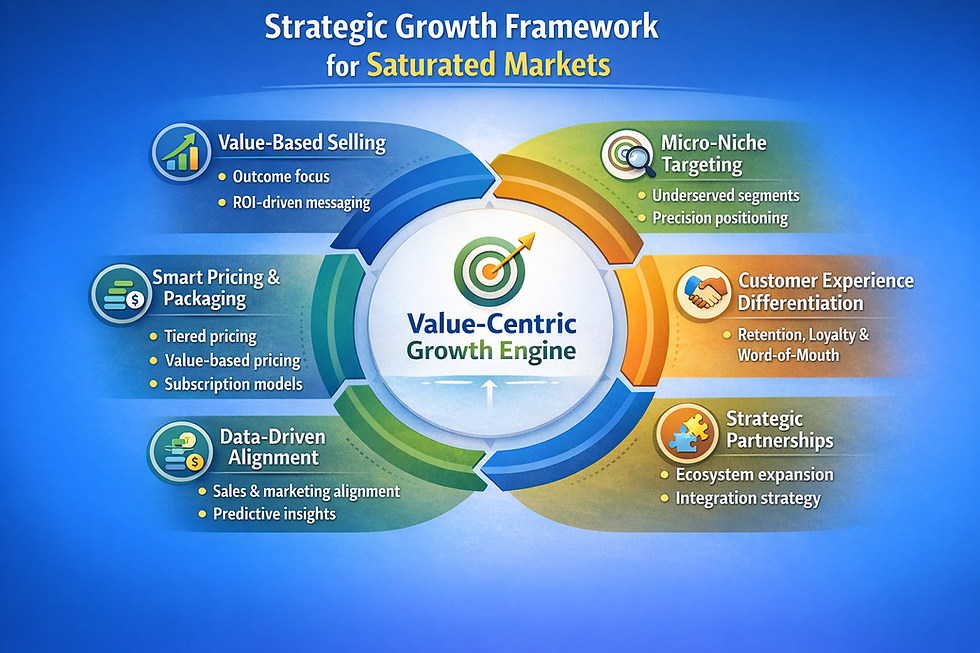
Start here: think about what the customer actually gains. Value-based selling shifts attention from product details to the real results people get. Picture this, it is not just a tool, yet something that boosts how fast work gets done. Rather than listing functions, show ways tasks finish quicker, spending drops, and income climbs. See the difference? It lives in benefits earned, not items bought.
Starting fresh helps companies stand out while making higher prices make sense. For this to work, leaders need to lead the change so sales, marketing, and support teams all focus on clear benefits customers can see.
Identifying Underserved Segments and Micro-Niches
Still, when markets feel crowded, hidden chances pop up; look closer. Not every business pays attention to tiny clusters of people who want something specific. While most chase wide appeal, pockets of demand slip through unnoticed.
Spotting gaps often comes from studying data along with splitting customers into groups. Take a software firm noticing that one type of business doesn't get enough support right now. That gap? It shows where custom messages plus focused tools might open fresh income paths. Hidden needs like these sometimes light the way forward.
Zooming in on tiny corners of a market helps companies stand out while hitting customer needs more precisely. This path opens doors when bigger arenas feel overcrowded. A sharp focus like that quietly reshapes how growth happens, where others see dead ends.
Innovating by Making Products and Services Stand Out
Starting fresh keeps companies alive where competition piles up. Changes to how things are sold might set one apart, just like fixing the item itself could. A new way of doing service works too, sometimes better.
Mixing goods with expert advice shows a difference. A monthly fee setup can set one apart. Packages filled with extra tools do too. Pay only if it works, that model builds worth people notice. Tying cost to real gains fits how buyers see value. Worth grows when payment follows performance.
A fresh idea might not need a gadget. Fixing how people start using something, helping them along the way, or making it work better with tools they already have, these moves often set one product apart. Small shifts like that tend to boost revenue without flash or noise.
Using customer experience to grow
Besides offering quality goods, standing out means treating people well. Where choices blur together, shoppers lean toward firms making them feel valued through care, attention, and subtle touches.
When teams reach out first, replies come quickly. Because messages feel personal, trust grows stronger. Learning tools help people understand better. Happy clients often stay longer. They might buy extra features too. Others hear about them through word of mouth.
When leaders set the tone, teams start putting customers first. In crowded markets, focusing on how people feel about using your product often lifts sales more than price cuts or ads ever could.
Strategic Partnerships and Ecosystem Expansion
When companies team up, fresh opportunities often appear. Working together lets them offer more while tapping into wider audiences. Shared efforts through joint deals boost what each can deliver. Connecting services sometimes uncovers strengths neither saw alone.
Picture this: a software firm teams up with another platform so users get everything in one place. Instead of going solo, consulting outfits link with tech suppliers to cover every step. Because of these ties, clients find it easier to stick around when needs add up.
Working with others lets groups grow faster, even when they are not pushing sales themselves. Partnerships open paths that skip the usual push to buy.
Data-Driven Sales And Marketing Alignment
When markets get crowded, using data to guide choices helps businesses move forward. Because insights are clear, sales and marketing stay on the same page. With goals matched, messages line up without waste. What shows up matters because effort follows evidence?
When machines learn patterns, businesses spot better prospects without guesswork. Instead of waiting, systems forecast the actions customers might take next. Personal touches in messages grow easier when software adapts on its own. Hidden chances to sell more often appear once data reveals past habits. Existing clients sometimes reveal new needs through quiet signals missed before.
Finding common ground between sales and marketing sparks better results. With aligned insights, performance climbs naturally. Growth gains momentum when both sides move together. Shared understanding fuels stronger outcomes across efforts.
Pricing and Packaging in Competitive Markets
What a product costs shapes how people see it. When everyone sells something similar, changing the price setup stands out. New ways to charge help pull in buyers who might otherwise ignore yet another option.
Pricing split into levels, along with free starting plans or charges tied to what users get, gives room to pick what fits both need and wallet. Offers grouped feel more worthwhile while also making it easier to decide what to buy.
Prices shifting with demand or buyer types keep firms in the game without squeezing profits too hard. Shaping how costs appear and what's included can open paths to more sales where space feels tight.
Leadership and Organizational Change for Sustained Growth
Getting ahead in crowded markets takes clear direction. Not every move works, yet trying new things keeps progress alive. Teams gain strength when trust replaces top-down control. Shifting departments around can spark fresh results. New rewards sometimes guide behavior better than old rules. Building skills nobody else has becomes a quiet advantage. Motion without purpose fades fast, while focused effort sticks.
Practice helps sales groups get better at showing worth, asking smart questions during talks, and working out deals. When different departments like those handling outreach, making products, and supporting buyers share effort, results match what customers expect. Worth grows when everyone lines up their actions.
When leaders back efforts to grow, those plans stick around because their support keeps things moving forward. It is attention from the top that quietly shapes what happens next across teams.
Real-World Examples of Companies Growing in Saturated Markets
Now here's a twist: growth can happen even when the field feels crowded. Take Apple, for example, swimming in a sea of smartphones, still finding room to stretch. Instead of chasing trends, they lean into what their name stands for. Their devices link together like parts of a whole, making life smoother. Customers pay not just for hardware, but for how everything clicks. That quiet consistency builds loyalty without loud claims.
Starting strong, Netflix stands out despite many rivals by creating its own shows. Because it suggests videos tailored to each person, viewers often stay longer. Subscription fees keep coming in steadily, which helps the company grow across countries. With fresh ideas leading the way, staying power comes naturally.
Starting fresh often helps even in crowded spaces. Leadership matters when change feels unlikely. Value stands out more than ever, especially if it's built differently. Innovation opens doors where others see walls.
Conclusion: Turning Saturation into a Strategic Advantage
Hard to stand out when everyone sells the same thing. Still, room exists to grow, just not by doing what others do. Focusing on worth instead of price often opens doors unseen before. Spotting overlooked needs can redirect energy where it counts. Change the product enough so people notice without losing trust. How customers feel during every step matters more than expected. Team up with different kinds of businesses to reach new circles. Hidden patterns in numbers guide better moves than guesses ever could.
Change often begins when leaders show the way, guiding groups toward shared goals. Success might come not despite market crowding, but because of how it pushes companies to stand apart through smart choices over time.
Survival in crowded markets? It belongs to firms putting worth first. Strong bonds matter more than noise. Constant change keeps them moving when others stall. Thriving here means growing without burning out. Sustainability follows those who stay focused, not flashy.
Call-to-Action
For anyone that wants any further guidance, ClickAcademy Asia is exactly what you need. Join our class in Singapore and enjoy up to 70% government funding. Our courses are also Skills Future Credit Claimable and UTAP, PSEA and SFEC approved. Find out more information and sign up here. (https://www.clickacademyasia.com/course/value-based-selling)


Comments