How to Negotiate with Procurement Without Gutting Your Margins

Introduction
There's no doubt that many business-to-business salespeople are familiar with the process. Months of prospecting, meetings, presentations, and alignment lead to procurement. Then comes the question every salesperson expects: “Is there any flexibility on the price?”
For many salespeople, the request signals the onset of margin erosion, as they feel compelled to cut prices to close the deal. However, negotiating with procurement does not involve making concessions that harm profits. Instead, the idea is to negotiate value so well that pricing is just a fraction of the discussion.
Companies that know how to navigate procurement negotiations recognize that procurement teams are not against them. They are dealing with individuals whose responsibilities go beyond buying the best products at the lowest possible prices.
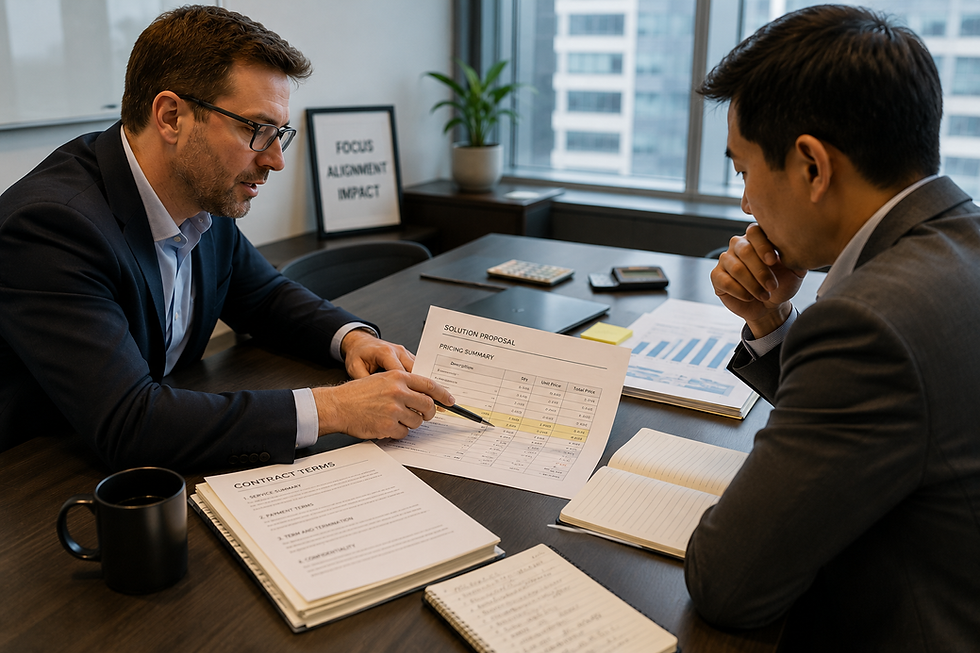
Role of Procurement in the Purchasing Process
One of the most common myths about the procurement process in business-to-business selling is that it is solely aimed at securing the lowest supplier prices. However, procurement experts do not focus solely on cutting prices. Their responsibilities include cost management, risk reduction, compliance assurance, vendor improvement, and facilitation of organizational objectives.
In most cases, companies' procurement processes are evaluated based on value-creation results. Cost reduction is often a key objective, which is why procurement teams frequently seek discounts during negotiations. Moreover, in many companies, procurement representatives are required to demonstrate tangible savings before any purchase.
The perception that procurement experts are engaged in a variety of organizational tasks may influence sellers' attitudes toward negotiation. Rather than viewing procurement experts as obstacles to overcome, it is more beneficial to treat them as businesspeople who perform their jobs well.
The Biggest Margin-Killing Mistakes Sellers Make
The biggest challenges in terms of selling occur long before procurement becomes involved. For instance, offering discounts at the earliest sign of objections makes the sellers vulnerable. Buyers who see fast responses to price concerns assume that further concessions can be made.
The next-largest error involves failing to set up the value before the price. When there is no understanding of the benefits of a proposed solution, price automatically becomes the primary concern for procurement representatives. When the value is unclear, procurement comparisons become price comparisons.
Some salespeople enter into discussions with clients and buyers without having clear limits and parameters. Such sellers don't have specific minimum prices, acceptable concession levels, or points beyond which they should walk away from a deal.
Lastly, sellers often focus on procurement at the expense of the executives. This mistake can cost you the support of a key internal champion, weakening your negotiating position and shifting the conversation almost entirely to price.
Build Your Negotiation Position Before Procurement Gets Involved
Effective B2B negotiation tactics should start long before any discussions involving pricing occur. This involves demonstrating the buyer's benefit at every stage of the sales process by linking the product or service to a specific outcome for the buyer's business.
Procurement finds it much harder to justify treating any purchase as a commodity if it knows that a particular product or service will generate higher revenues, lower expenses, enhance productivity, or reduce risk.
Supporting your case with buy-in from executives is also crucial. These people will often see the value in purchasing a solution. They may serve as an advocate in procurement discussions to push negotiations beyond just price.
The ability to differentiate your offering will make it much easier to protect margins. When two vendors offer similar solutions at roughly the same cost, they will likely face a difficult negotiation with procurement.
Knowledge of the Psychology of Procurement Negotiation
Effective negotiation requires a strong understanding of how procurement negotiators think and operate. In most situations, procurement negotiators feel that suppliers need to justify their prices. Any immediate concession could undermine their credibility, as it suggests the original price is too high.
Some of the most common tactics used by procurement negotiators include aggressive opening proposals, references to competitor offers, deadline threats, and even silence. However, these tactics are not always personal rather, they represent ways for negotiators to achieve their goal of the best possible deal for their organization.
The main principle behind success in such negotiations is to stay professional. Becoming defensive or emotional often causes negotiators to make unnecessary concessions. It is more important to discuss business benefits and the implications of the proposed solution than personal feelings.
Practical Strategies to Defend Your Margins
The first and most fundamental way to secure margins is to emphasize benefits over price in all interactions. When price considerations arise, try refocusing on the outcome to help you demonstrate that the investment level makes sense.
Next, it is crucial to understand that one must always trade, not give. Every single concession needs to come with something in return. Thus, the same vendor could offer a modest discount on the condition of extending the contract duration, increasing purchase volumes, accelerating payments, or providing references.
Conditional negotiations can also be used effectively. The essence is not to accept all demands, but to ask about the corresponding commitments instead. Examples include phrases like, "If we agree to do that, would you proceed with the deal this quarter?"
When price remains a significant consideration in negotiations, you may want to consider ways to address the buyer's concerns other than discounting. For instance, you may consider adjustments to scope, delivery phasing, or the nature of services.
Ultimately, protecting price integrity is vital. Over-discounting not only leads to losses but also sets up false expectations for the next time.

Handling Common Procurement Objections
The most popular objection that you can expect from your potential clients is, "Your competitor is less expensive than you are." Though the statement may well be true, cheaper products do not always mean more value. The key is to highlight differences between outcomes, services provided, reliability, quality of implementation, and risk management.
If you’re told the price they received was lower than yours, treat it with caution rather than acceptance. Ask further questions to find out what is wrong with your solution. Some buyers need a bit more motivation to invest.
When it comes to budget constraints, discuss priorities, expectations, and possible approaches to implementing the project. Manyions can somehow afford to add much value to significant operations.
"We should be able to get a better price." Avoid falling into the trap of price competition, and remind your partners of the unique value your firm can offer them. Point out the value created through the cooperation process.
Timing and Techniques for Effective Concessions
While concessions may be necessary, they should be made strategically. Concessions with low costs but high perceived value to customers tend to work best. Training initiatives, enhanced reporting, flexible policy implementation, and other value-added offerings can build goodwill without sacrificing margins.
The timing is crucial as well. Concessions should be earned, and each concession should bring negotiations one step closer toward a resolution.
A calculation on the value of the business relationship as a whole should always precede any concessions. Margins must be maintained, but the goal should always be sustainable business relationships.
Building Long-Term Relationships with Procurement
The best companies approach procurement as a long-term partnership rather than a one-time negotiation. Trust is created through consistent delivery on promises, openness in communication, and assistance in ensuring that customers succeed.
Eventually, effective partnerships will lead to decreased price pressures since procurement will have more trust in the supplier as reliable and valuable. Reliable vendors will likely be given priority in future purchases. They will not be scrutinized as much as potential vendors with unknown backgrounds.
Through performance, collaboration, and results, a vendor can evolve into a partner.
Conclusion
Procurement negotiation should not be considered successful if it was achieved through hard bargaining that resulted in discounted prices. The essence of procurement negotiation is value demonstration, buyer understanding, and strategic negotiation that results in mutual benefits for all involved parties.
The companies that successfully negotiate with procurement prepare thoroughly, align stakeholders, sell on value, and manage their concessions. They are confident during negotiations because they know the impact their products have.
Successful negotiators achieve business success without providing the lowest prices on the products and services they offer. The secret lies in value proof and the creation of beneficial relationships.
Call-to-Action
For anyone that wants any further guidance, ClickAcademy Asia is exactly what you need. Join our class in Singapore and enjoy up to 70% government funding. Our courses are also Skills Future Credit Claimable and UTAP, PSEA and SFEC approved. Find out more information and sign up here. (https://www.clickacademyasia.com/course/procurement-power-play ).



Comments