How to Sell to CIOs and CTOs: Understanding the Technical Executive Buyer

Introduction
Large-scale enterprise technology purchases are typically not made by a single person. But when it comes time to decide whether to make significant investments in software, infrastructure, cybersecurity, or digital transformation, CIOs and CTOs usually make the call. They are essential players in assessing which technologies make sense for the organization.
Most salespeople find that selling to CIOs and CTOs is difficult. That is because technical executives tend to view products through a different lens compared to typical buyers. For one, they care less about features and more about business value, risk mitigation, and strategic implications. Learning how to sell to CIOs and CTOs will prove valuable for many salespeople.
Understanding the Modern CIO and CTO
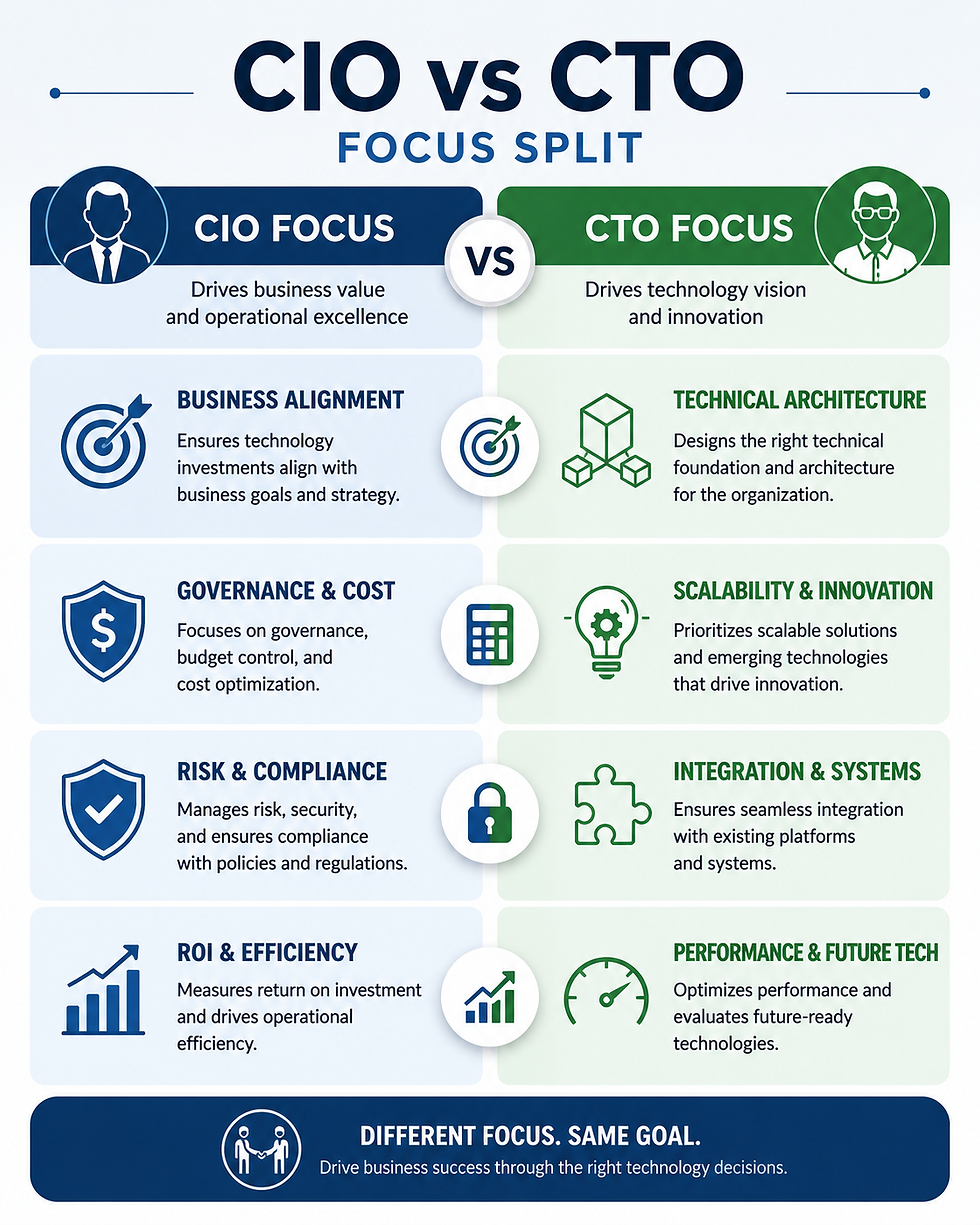
To effectively market your product or service to CIOs and CTOs, you must first familiarize yourself with the responsibilities associated with these positions. Though the roles share a common goal of technology leadership, there are distinctions between the two.
The main priority of a CIO is to ensure that technology solutions align with business goals. CIOs are interested in operational effectiveness, cybersecurity, governance, compliance, costs, and any digital transformation projects.
On the contrary, a CTO's main concerns tend to revolve around innovation, architecture, scalability, and technical vision. These executives need to know whether the technologies will integrate easily with existing platforms and whether they can scale in the future.
Such distinctions can help you tailor your pitch based on the interests of the specific executive.
How Technology Executives Evaluate Solutions
A major mistake vendors make in their sales process when dealing with CIOs and CTOs is focusing too much on the product itself. Technical characteristics are of little importance to executive-level buyers; the business benefits of a solution matter.
Technology executives assess solutions using multiple criteria, such as scalability, reliability, security, integration options, and return on investment. Additionally, they assess whether a particular solution helps them implement a strategy for digital transformation, cloud migration, improved customer experience, or process optimization.
Salespeople must link technical features to business benefits when presenting solutions to highlight their strategic significance.
Technical Research on CIOs/CTOs Before Engagement
One of the most important factors in learning to sell to CIOs and CTOs is preparation. These executive buyers are very clear that they expect vendors to understand their business and technology ecosystem before engaging with them.
This can involve researching the company's technology architecture, cloud environment, security concerns, business goals, and recent initiatives. It helps the salesperson frame their solutions accordingly if the company is working towards expansion, modernization, cost efficiency, or risk mitigation.
The more insightful you are, the more credibility you earn upfront.
Establishing Credibility with CIOs and CTOs
Executives in the tech world face numerous sales pitches throughout the year. Therefore, they will readily reject vendors who are not prepared or whose main goal is product promotion.
If you want to sell effectively to CIOs and CTOs, you need to position yourself as an advisor, not a salesperson. In other words, this involves coming prepared with industry knowledge and the latest technology trends.
The ability to offer solutions to a strategic problem and present market insights that align with their needs helps build credibility. The best salespeople build trust by solving problems for the buyer, not by presenting products.
Conducting Effective Discovery Conversations
It is important to have effective discovery conversations when selling to technology executives. Instead of rushing to pitch a solution, try to understand the company's needs and priorities.
Questions should be asked about company objectives, technology, growth strategy, problems, and desired results. Try to get executives to talk about their current situation and the results they want to achieve.
Good listening can help identify buying signals and priorities that wouldn't normally appear in a sales conversation.
Selling Business Outcomes Instead of Technology Features
In cases when you have to sell to a CIO or CTO, the outcome of the business has to be put first. The primary function of technology leaders is to generate tangible results, not to introduce technology solutions.
So, rather than talking about the capabilities of technology, focus on how they increase revenue, lower costs, enhance security, boost productivity, or accelerate innovation. All features must support an outcome.
Overcoming Common IT and Executive Objections
It is quite common to encounter objections from executives when selling enterprise software. The usual concerns raised include security, implementation, costs, time, and even resource availability.
One must remember that behind all these objections is a hidden risk that an executive seeks to mitigate. Since the role of the technology leader involves mitigating business risks, much of the skepticism stems from a desire to avoid errors.
When addressing these objections, a sales professional should first recognize the concern, then validate it, assess its potential impact, and offer a solution.
Navigating Complex Buying Committees
Despite your success in selling to the CIO or CTO, they are not the only stakeholders who need to be convinced of the purchase. Often, the buying process will involve input and approval from finance departments, security personnel, procurement specialists, operations experts, and management.
Identifying and understanding the interests of all stakeholders is critical to achieving consensus. In some cases, the CIO may be concerned about business value, the security department about compliance, and the finance leader about cost savings.
Finding internal champions can significantly boost your sales efforts.
Presenting to Technical Executives
Executives have little interest in the usual kind of demonstrations. They do not need to be shown how a new technology works. Instead, executives expect concise, strategic talks that focus on the results of using specific technology.
A good presentation will show how an existing problem could be solved and what benefits would result from its adoption. The presentation will have clear criteria for measuring success.
Salespeople can benefit from focusing their discussion on strategy.
Negotiating and Closing Executive-Level Deals
Many enterprise technology sales include an extended evaluation process and lengthy discussions about procurement issues and contracts. The deal closure demands patience, persistence, and a good understanding of executives' priorities.
At each step, ensure risk reduction and the realization of business value. Provide business examples and show how to implement the solution successfully.
Pressure tactics should not drive urgency in the deal-closure process. On the contrary, create a sense of urgency by highlighting the benefits of a new solution or the cost of keeping things as is.
Building Long-Term Relationships with Technology Leaders
The process does not stop at contract signing. Indeed, post-purchase is when the true success or failure of the relationship can be established.
Companies that continue to add value have better chances of renewing and expanding their relationships, making referrals, and securing future business. Keeping executives engaged, exchanging information on strategies, and helping customers deliver results will help establish the relationship.
It should be about establishing a partnership, not just working with a vendor.
Common Errors by Salespeople When Pitching to CIOs and CTOs
One of the major issues facing most sales professionals when pitching to CIOs and CTOs is the failure to use modern sales strategies. The use of outdated strategies, such as leading with features, a lack of understanding of business objectives, overcomplicating, and failing to address stakeholder alignment, may cause the sales professional to lose credibility.
Another error is approaching all executives with the same mindset. Every organization, every industry and even every technology executive has its own unique set of challenges. Addressing those challenges is a huge step forward in building the right relationship and achieving success.
Sales professionals can avoid common sales errors by learning to approach executives more effectively.
Future Trends in Executive Technology Buying
The evaluation process for organizations looking for new technology products is evolving. Some of the major influences on the technology investment process include artificial intelligence, cybersecurity, hybrid cloud infrastructure, and data-driven decision-making.
Technology executives need partners that can help guide them through this period of transformation. The future belongs to those who bring expertise and insight, among other things.
Conclusion
Successfully selling your products to CIOs and CTOs requires more than technical expertise. It involves understanding executive concerns, formulating a strategy, managing risk, and aligning with organizational objectives. In selling technology, what is expected is not simply a presentation filled with features. What is needed is a solution that provides measurable results.
By emphasizing the importance of business value, conducting thorough discovery, managing objections effectively, and building trust, one can become more competent in dealing with technology executives. Sales professionals adept at executive selling will be better prepared to win larger contracts, form strategic partnerships, and drive growth in the highly competitive world of technology business.
Call-to-Action
For anyone that wants any further guidance, ClickAcademy Asia is exactly what you need. Join our class in Singapore and enjoy up to 70% government funding. Our courses are also Skills Future Credit Claimable and UTAP, PSEA and SFEC approved. Find out more information and sign up here. (https://www.clickacademyasia.com/course/tech-sales-domination ).


I’ve tried a lot of driving games lately, but Drive Mad stands out because success depends more on timing and balance than pure speed.