Social Media Buzz Weekly: Roundup of Social Media Updates

Welcome to Social Media Buzz Weekly, your weekly bulletin of the latest social media updates. With the social media landscape evolving with each passing day, it can be challenging to keep a tab on the rapid developments. Well, not anymore, as we have taken it upon ourselves to keep you abreast of every happening in the social media space.
So, without any further ado, let’s look at some of the most significant developments from the last week in the world of social media.
1. Meta Expands Access to Creator Studio App
Meta has expanded access to its new Creator Studio app, which provides artificial intelligence-powered guidance to help creators maximize their growth on Facebook.

The company announced the new Creator Studio app in June and subsequently launched an initial test of the platform with a small group of Facebook creators. Now Meta is opening up the tool to any creator using iOS in the U.S. and Canada. The company also shared new insights into how initial testers have used the app to boost their Facebook presence. Meta said a key focus for the new app was building a separate space where creators were not distracted by other Facebook elements.
2. Meta Removed More Than 750,000 Teen Accounts in Australia
Meta has shared new data on its compliance with Australia’s under-16 teen social media ban, with the company reporting that since June 2025, it has removed access to more than 750,000 Australian accounts across Facebook and Instagram which its systems determined belonged to people below the minimum age.

That’s up from the 550,000 teen accounts Meta reported in January. The company has been working to improve its detection and enforcement as Australian authorities increase pressure on social apps to adhere to its new rules. Meta said the rise in account enforcement actions was due to the continued improvement of its detection systems, with its artificial intelligence-powered tools in particular catching more teen accounts over time. In addition, Meta said it’s also made it easier for parents and the community to report a suspected underage account.
3. TikTok Announces 2026 Music on Stage Competition
TikTok has announced the return of its Music on Stage competition, which is kind of like Eurovision for TikTok creators. Music on Stage invites all musicians to enter tracks by posting a performance video using the hashtag #MusicOnStage. Finalists are then invited to take part in a live event in the app, where they’ll go head-to-head against other performers.

The first Music on Stage event was held last year, resulting in over 230,000 posts in the app using the #MusicOnStage hashtag, and 8.2 billion total impressions, per the platform. The final event attracted more than 1.4 million viewers. The 2026 event will include a refreshed format, with creators from more than 20 regions set to take part. Winning creators will get access to professional development opportunities in partnership with TikTok’s SoundOn music development program. They will also receive the opportunity to record and release original music with full production, distribution and promotional support.
4. ByteDance Signs Motion Picture Association Deal
ByteDance has announced a new agreement with the Motion Picture Association, which will ensure that the artificial intelligence options available from ByteDance include more guardrails to protect against IP infringement.

In February, the MPA called on ByteDance to implement more restrictions on the use of its Seedance AI video generation tool. This came after videos produced by the app included AI versions of actors depicted in realistic-looking scenes. In one creation that gained a lot of attention, actors Brad Pitt and Tom Cruise were depicted fighting on a roof. The cease-and-desist letter from the MPA sought to pressure ByteDance to implement more protections to stop the unauthorized use of actors and other studio-owned IP. That initial step was the seed of this new agreement, which aims to prevent people from using AI models in TikTok to generate video clips of IP protected by the film and television industry.
5. Instagram Reveals Its New Logo
Instagram is trying out a new look, with platform Chief Adam Mosseri sharing the first view of an updated logo. Instagram’s new branding takes on a different style than the previous IG logo, offering a refreshed feel that could help to reinvigorate the app.

Instagram also shared an overview of its updated “brand system”, which includes new fonts, icons and formats. Many people have complained about the change, with Mosseri’s announcement posts on both Instagram and Threads seeing more than 5,000 combined replies at the time of publishing. Many criticized the font choice, noting that the “r” looks like a “z” due to the stylized presentation. Others used the comment section to gripe about common IG themes, saying they don’t care about updates of this type and that they just want to see posts from the profiles they follow, and the other way around.
6. Snapchat Adds Pharma Ad Disclaimer Links
Snapchat has announced a new ad option for pharma marketers. The addition will let pharma advertisers include product disclosure links in their ads, making it easier for users to get more information directly from the in-feed display.
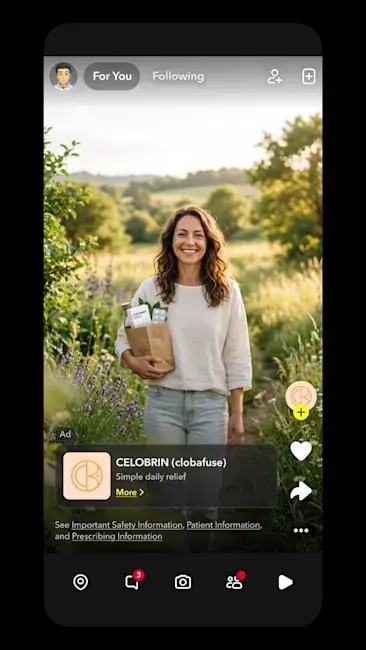
The new pharma ads on Snapchat will support multi-CTA attachments for health and safety notes, providing more context from the promotion. Snapchat’s updated pharma ads will include smaller text links below the main ad, so users can tap through on the disclaimers. Snapchat added that the updated pharma ads format will ensure that pharma brands remain compliant in regards to required disclosures, while also letting them connect with Snapchat users, who are often looking for health advice.
7. Pinterest Partners With Zillow for Ad Targeting
Pinterest and real estate marketplace Zillow have announced a new partnership that will enable Zillow Elevate advertisers to target Pinners via Pinterest’s Media Network Connect option.

Pinterest’s Media Network Connect, which is available within Pinterest Ads Manager, enables external media networks to securely share first-party audience segments, as well as product catalogs and conversion metrics, with brand advertising partners. The partnership with Zillow will let advertisers display their ads to Pinners based on Zillow consumer segments, providing another way to reach potentially interested shoppers in different categories. Zillow Elevate partners will be able to target users based on 34 different Zillow consumer segments, including buyers, renters, sellers and homeowners. Zillow’s audience segmentation also includes specialty groups, such as fixer-upper shoppers and recent homeowners, which Pin advertisers will now be able to reach using increasingly targeted campaigns.
8. X Adds Video Overlays
X has announced that users in the iOS version of the app can add text overlays to their video uploads, providing another means to create engaging video content.

X’s video overlay option offers a simple way to place text and emojis over a video clip. This is a small update in the broader context of video creation and editing features, but it’s a significant update for X’s tools, which are still behind other apps. Back in 2024, then X chief executive Linda Yaccarino was keen to push the video angle at the app, in response to a rise in video engagement by users. Indeed, Yaccarino repeatedly stated that X was set to become a “video-first platform,” with a focus on more video content and consumption.
9. US Court Rules Tech Firms Must Face Lawsuits Over Social Media Addiction
A US appeal court has allowed thousands of lawsuits to move forward against Meta Platforms, Alphabet’s Google, ByteDance’s TikTok, and other social media companies over claims they designed their products to be addictive to young users.

The San Francisco-based 9th US Circuit Court of Appeals rejected the companies’ bid to reverse a lower court’s ruling forcing them to face some 2,400 lawsuits over the claims filed in federal court. The companies, which also include Snap Inc’s Snapchat, had argued that Section 230 of the Communications Decency Act of 1996 – which shields them from lawsuits over content posted by their users – also shields them from allegations that they failed to warn the public about the addictive nature of their platforms. But the court said the appeal was brought too early for it to weigh in, a problem the judges flagged during oral arguments in the case. Most appeals come after a trial in the case has concluded, so the judges’ decision would be reviewed at that time, the judges said.
Wrapping Up
And that was a wrap of this week’s Social Media Buzz. We’ll be back next week with more news and updates for you from the social media world. Till then, stay tuned!
If you want to read more on the latest developments taking place in the social media space, take a look at ClickInsights’ Social Media Buzz, wherein we bring to you monthly reports on everything going on in social media, ranging from platform updates to policy changes that influence the way we market.


Online social (fiwfans-asia) platforms have created new opportunities for people to communicate and share moments with others. From short messages and photos to longer discussions and community posts, users have many ways to express themselves. These platforms can make it easier to maintain friendships, reconnect with old acquaintances, and meet people who share similar interests. Online communities also encourage users to exchange recommendations, opinions, creative ideas, and useful information. Social networking can be enjoyable when people communicate respectfully and remain mindful of privacy. As digital communication continues to evolve, online social websites remain valuable spaces for connection, conversation, discovery, creativity, and everyday interaction across diverse communities.
Online social (รับงานตรัง) networking provides an easy way to meet people, share experiences, and participate in digital communities. Users can create personal profiles that reflect their interests, hobbies, goals, and personalities, making it easier for others to discover common connections. Messaging and interactive features encourage conversations, while groups and communities bring together people who enjoy similar topics. Social platforms can also support professional networking, creative expression, entertainment, and information sharing. For many users, online social spaces offer a convenient way to communicate without geographical limitations. A positive experience depends on respectful behavior, thoughtful sharing, and responsible interaction, helping communities remain friendly, useful, engaging, and welcoming.
The growth of (รับงานระยอง) online social communities has changed the way people interact and communicate. Instead of relying only on face-to-face conversations, users can connect through messages, posts, groups, and shared interests from almost anywhere. Online social platforms allow individuals to introduce themselves, exchange opinions, discover useful content, and participate in conversations that match their interests. They can also provide spaces for creativity, entertainment, networking, and learning. A strong social platform encourages users to communicate openly while respecting different perspectives. When used responsibly, online social communities can help people feel connected, discover new opportunities, and maintain relationships while enjoying a flexible digital communication experience every day.
Online social (รับงานสมุทรปราการ) websites offer convenient ways for people to communicate, discover communities, and stay connected with others. Whether users are interested in entertainment, hobbies, travel, education, or everyday conversations, social platforms provide spaces for sharing experiences and finding people with similar interests. Features such as messaging, comments, groups, profiles, and content sharing make online interaction simple and engaging. Social websites can also help individuals maintain friendships when distance makes regular meetings difficult. By encouraging respectful communication and authentic conversations, these platforms can create welcoming digital communities. Online social networking continues to influence how people communicate, collaborate, discover information, and build relationships in today's increasingly connected world.
Online social (รับงานสระบุรี) platforms have become an important part of modern communication, helping people connect, share ideas, and build relationships across different locations. Users can create profiles, post updates, exchange messages, share photos, and participate in communities based on common interests. These platforms make communication faster and more convenient, allowing friends, families, and new acquaintances to stay connected throughout the day. Online social spaces can also provide opportunities to discover new hobbies, learn about different cultures, and express creativity. With thoughtful communication and responsible use, social platforms can become positive spaces where people interact, exchange experiences, support one another, and enjoy meaningful digital connections every day.