The Hybrid Attribution Model: Merging Software Data with Qualitative Insights


Why the Modern Marketing Approach is Not Enough
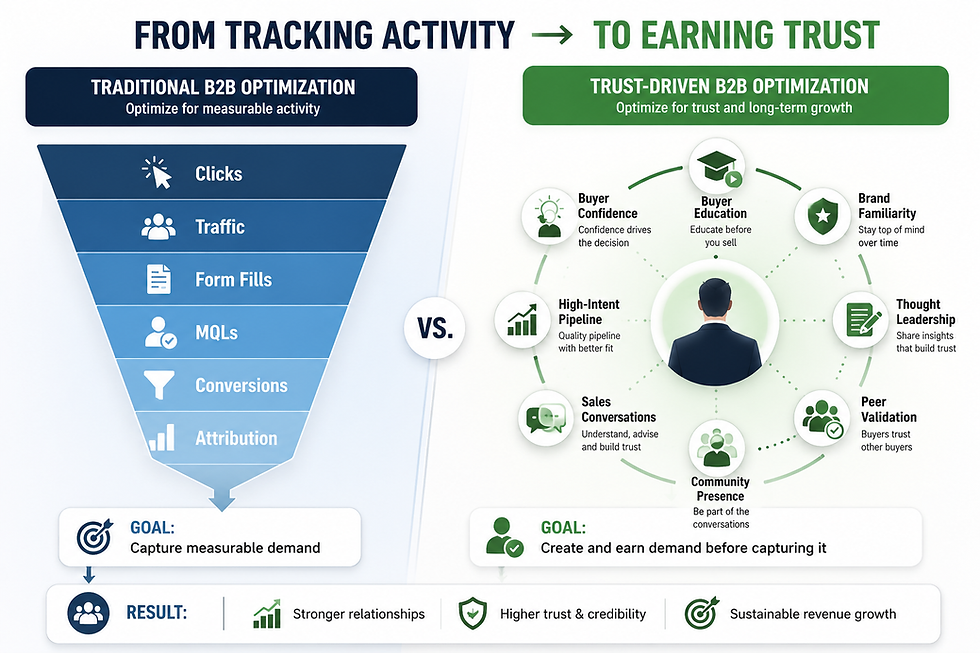
There are many tools available to modern marketing teams to gather and analyze data. Analytics tools make it possible to track web traffic, clicks on ads, effectiveness of campaigns, and sources of conversion. Nonetheless, more information is not always equal to a deeper insight into the customer journey. It is very often hard for modern organizations to find an answer to one simple question: what was it that made customers go with their company?
For instance, a marketing dashboard will indicate that the deal is from Google Organic Search, CRM will state that the source is Direct Traffic, while the advertising tool will say it generated a conversion. But the buyer may admit that he first heard about the company on a podcast, followed the executives on LinkedIn, and got a recommendation from his friend prior to visiting the website.
What Is the Hybrid Attribution Model?
The Hybrid Attribution Model is an innovative way of attributing marketing actions by merging software metrics and direct buyers' views. Rather than being limited to one source of attribution, the framework unites several views on the process of customer discovery, evaluation, and selection.
Traditional attribution uses the quantitative information gained via various platforms, including Google Analytics, CRM, marketing automation tools, and advertising platforms. The information provided is the measurable events, such as visits to the website, interaction with campaigns, and conversion points.
On the other hand, the qualitative insights help us understand the human factor of the process. The qualitative insights are obtained through Self-Reported Attribution, interviews with customers, sales conversations, and feedback from buyers. The insights cover such important aspects as recommendations, community interactions, podcast influence, and thought leadership.
The purpose of the Hybrid Attribution Model is not to substitute the existing analytical tools but to complement them. The software tells us what happened. The buyers tell us why it happened.
Why Software Attribution Isn't Sufficient for Modern B2B Purchasing Decisions
Software attribution is a useful tool for marketing measurement purposes, but it does have certain drawbacks. All attribution tools are geared toward tracking digital actions taking place in quantifiable environments. They account for clicks, visits, downloads, and form fills. However, some purchases start far away from those measurable actions.
Enterprise buyers conduct research through private conversations, communities of interest, podcasts, and references from other professionals. They impact decisions long before the potential customer visits any site and submits their information. Traditional software can't pick up on these interactions because they take place outside the scope of its capabilities.
The example of a customer that was generated through Organic Search, according to a CRM report, may actually share the story about discovering the company in a podcast interview a couple of months ago. It was the last step before conversion.
The software accounted for the action. The buyer revealed the influence.
The Hybrid Attribution Model bridges the gap between actions and influences that precede them.
Step 1: Gather Self-Reported Attribution Data
The first step in the creation of the Hybrid Attribution Model is to gather data from the buyers themselves. This stage of the process is called self-reported attribution when buyers describe how they got familiar with the brand or what triggered them to interact with the company.
It is possible to ask just one question to gain lots of information:
"How did you actually hear about us?"
At this point, it is up to the buyer to provide their answers to the question and describe their experience in detail. As opposed to forcing the customers to fall into predefined tracking categories, companies can learn about the actual conversion experience.
It is possible to gather data at high-intent touchpoints, such as demo request forms, Contact Sales pages, enterprise inquiry forms, or sales discovery calls.
Sometimes, buyers' answers will indicate certain channels of interaction that traditional analytics tools cannot measure. Thus, the prospect could mention podcasts, LinkedIn posts, customer referrals, and private industry communities.
Step 2: Combining Software Data With Buyer Insights
The true strength of the Hybrid Attribution Model stems from the combination of software data with buyer insights. Both sources answer different questions related to the customer journey.
Software attribution provides companies with the knowledge of where measurable touchpoints happened. It tells what channel drove the website visit, what campaign was engaged, and what source received conversion credit.
Buyer insights help to understand why these activities happened in the first place. They tell us what led to awareness creation, what contributed to trust building, and what drove buyers into actions.
Thus, if an organization discovers that their customer converted via Organic Search, marketing specialists may consider SEO as the main channel. In reality, the buyer may share that he learned about the company through the podcast, consumed the content of the founder, and later searched for the company online.
Here, search helped capture the demand, while the podcast created it.
The Hybrid Attribution Model acknowledges the contribution of all the meaningful influences, not just the last measurable one.
Step 3: Build a Consistent View of Attribution in Marketing and Sales
For a Hybrid Attribution Model to work well, Marketing, Sales, and RevOps teams have to work together. Attribution is not just the role of Marketing since all of the customer-facing teams offer important insight into the buyer's journey.
The Marketing team offers data about marketing campaigns, content consumption, website activity, and channel success.
On the other hand, the Sales team provides an additional perspective since sales reps discover the reason for searching, who convinced the buyer, and the information that helped the buyer evaluate the solution.
Sales reps may ask more detailed questions, such as who introduced the company, what resources helped the buyer with the evaluation process, and what convinced the buyer to act.
RevOps brings the two sets of insights into one by correlating them with data from CRM and revenue outcomes.
The combination of insights provided by both marketing and sales teams allows the organization to see the bigger picture and understand how buyers make purchase decisions.
How the Hybrid Attribution Model Enhances Marketing Decision Making
The primary advantage of the Hybrid Attribution Model is improved decision-making. By integrating measurable data and buyer insight, companies can understand their drivers for revenue much better.
One of the primary advantages is enhanced marketing investment decisions. Organizations will be able to spot channels that generate demand and not just demand capture channels. Thus, organizations will be able to avoid cutting off important brand-building activities just because of difficulties in measurement.
The model also enhances marketing reporting. The contributions of podcasts, thought leadership, community building, and advocacy programs are often made prior to conversion by the buyer. Using a hybrid model, the importance of these activities is ensured.
In addition, it enhances the alignment between Marketing and Sales. Both departments get a better understanding of the buyer's behavior and focus on those experiences that really matter.
Finally, it enhances the content strategy development process. Instead of developing content solely on the basis of clicks and downloads, companies will be able to create materials on the basis of buyers' feedback.
Mistakes in Creating Hybrid Attribution Models
Several mistakes decrease the efficiency of the mentioned framework.
One of them is considering software attribution as the absolute truth. Software gives great analytics, yet the measurable actions do not mean that the touchpoint is the most influential one.
The second mistake in developing a Hybrid Attribution Model is gathering data on the buyer but not analyzing it. Self-Reported Attribution becomes valuable only when some insights and patterns are discovered.
Thirdly, there is a possibility of ignoring Sales and RevOps that know everything about customers' conversations and have essential attribution knowledge.
Lastly, companies may try to find a perfect attribution. Yet, due to the complicated process of purchasing in business, it is impossible to measure all the interactions.
Perfection should not become an aim. Better attribution will be the aim.
A hybrid attribution model allows companies to make more efficient decisions by using various sources of knowledge.
Creating an Attribution System of the Future Based on Reality of Buyer Behavior
The future of B2B attribution relies on the knowledge of the reality of buyer behavior rather than focusing on digital measurable activities alone. In the modern world, it is not easy to assume that the buyer's journey consists of seeing a commercial, visiting a website, and making a purchase. There is a lot that takes place in between and much of which cannot be quantified.
Consumers may talk to industry experts, consult with peers, engage in online discussions, listen to webinars, etc., prior to connecting with a company.
This model provides the necessary connection between traditional analytics and the reality of today's buying journey, recognizing the importance of technology as well as including the missing element that software can't capture.
It makes no sense for businesses to wonder what is more important: data or insights into customers.
Software shows the part that is visible. Buyer conversations show the hidden part of the buying journey.
Conclusion: The Future of Attribution Is Hybrid
The modern buyer journey for B2B transactions is too complicated to be described by software data alone. Analytical tools provide essential information, but there are aspects of any purchase decision that are beyond the reach of software analytics alone.
The Hybrid Attribution Model allows companies to take a broader approach by integrating marketing metrics with buyer insights. Not only does it let them know where the conversions take place, but it also lets them know why buyers chose to engage.
Self-Reported Attribution, sales discovery discussions, buyer insights, and analytics all contribute to a deeper understanding of revenue generation.
In the future of attribution, those who are most advanced will not be companies with the best tracking software. They will be companies that have learned what the data means.
Software provides the ability to measure. Buyers provide the context.
By putting both into play, organizations gain a more intelligent way of approaching attribution.


Hybrid attribution makes much more sense to me than relying on one dashboard to explain every customer decision. In a past campaign, I noticed that the numbers showed where leads came from, but short conversations with customers explained why they actually converted. That combination gave us a clearer picture than either source alone. I use the same mindset when evaluating business software, and reading paycom reviews can add practical context that feature lists miss. Bringing quantitative data and qualitative feedback together feels more realistic, because buyers rarely follow one perfectly measurable path from first touch to final decision in practice.