The Inbound Sales Methodology: A Step-by-Step Guide

Introduction
Sales have radically transformed over the past ten years. Purchasers no longer wait for salespersons to introduce products to them. They conduct their own research, read reviews, and compare solutions before ever communicating with an organization. The traditional sales process, founded on cold calling and hard pitching, cannot keep pace with this buyer-centered universe.
This shift has given rise to the inbound sales methodology, a new paradigm focused on helping buyers rather than selling products. Inbound sales is not about interrupting prospects, but about getting in sync with their needs and goals. The result is a sales process that's more natural, more efficient, and more in line with the way people want to buy today.
Through understanding inbound sales and applying it step by step, sales teams can engage in more meaningful conversations with purchasers, develop more significant relationships, and ultimately seal more deals with less resistance.
What is Inbound Sales Methodology?
Inbound sales methodology, on its most basic level, is a customer-focused sales methodology. It's about assisting prospects through their own buying process, providing support, resources, and knowledge at every stage. Unlike outbound sales, where the salesperson pushes messages out to large numbers of individuals, inbound sales listen, learns, and engage with prospects that are already showing interest.
Inbound vs. Outbound at a glance:
Outbound sales are all about pushing: cold calls, unsolicited emails, and direct advertisements.
Inbound sales is all about pulling qualified leads who've already taken a step, such as downloading a guide, attending a webinar, or visiting a website.
This methodology ties in exactly with the sales process today since it complements how buyers behave today. People require personalization, relevance, and trust before they are willing to buy. Inbound sales delivers exactly that. For a clearer understanding, you can take a look at this comprehensive guide on inbound sales by HubSpot.
Table: Inbound vs. Outbound Sales (At a Glance)
Aspect | Outbound Sales | Inbound Sales |
Approach | Push (cold calls, mass emails) | Pull (prospects already engaged) |
Buyer Experience | Interruptive, often unwelcome | Helpful, supportive, trust-building |
Focus | Salesperson’s agenda | Buyer’s goals and needs |
Communication Style | Generic, one-size-fits-all | Personalized, relevant, contextual |
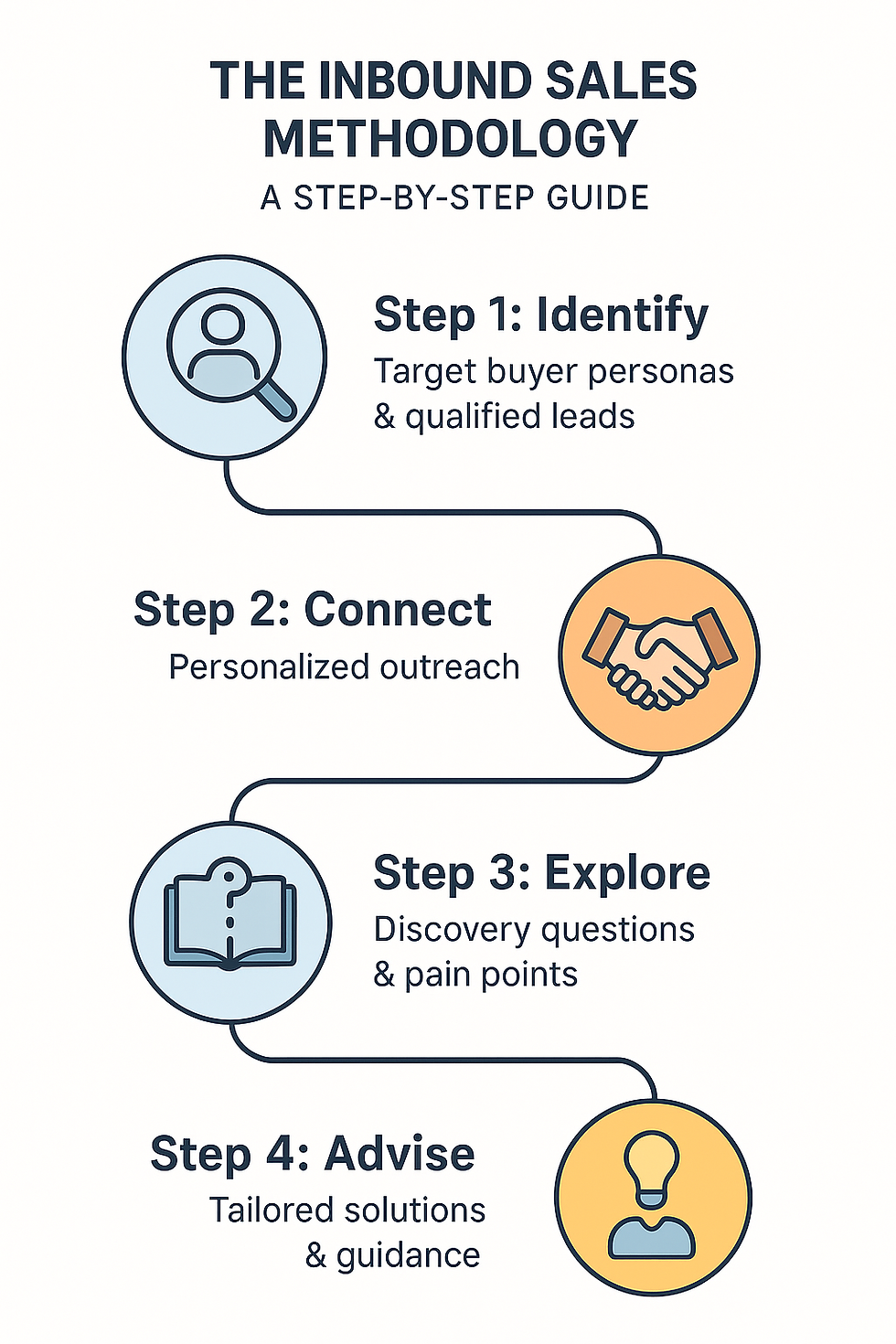
Step 1: Identify
The first step in the inbound sales methodology is identifying the right prospects. Not every lead is worth it, and chasing the wrong ones is a loss of time and energy.
Sales teams start by creating and refining buyer personas, detailed profiles of ideal customers. A good persona specifies not only demographic data but also motivations, challenges, and purchase triggers. With the persona in place, salespeople can use data like website traffic, email responses, and content downloads to spot leads that fit that profile.
By focusing on those prospects alone that are a good fit, the sales teams can prioritize and increase their chances of success.
Step 2: Connect
Having found qualified prospects, the second step is to connect with them. This connection should never be in the form of a hard sell. Instead, it should be about building trust right from the start.
One-size-fits-all generic pitches repel buyers. Personalized communication, on the other hand, shows the prospect that you've made an effort to comprehend their situation. A short email that references a whitepaper they've downloaded or a LinkedIn message that speaks to their role directly is far more impactful than a generic introduction.
The goal is not to make a sale on first contact but to start a meaningful conversation. By connecting in a human and relevant way, salespeople lay the groundwork for long-term relationships.
Step 3: Explore
After a connection, the second stage is to investigate the prospect's reality in-depth. Exploring involves asking questions, listening carefully, and uncovering the real issues that need fixing.
Good discovery conversations are about the buyer's pain points, goals, and constraints. For example, instead of jumping right into a product demo, a salesperson can ask open-ended questions such as:
What are some of the challenges you are experiencing in your role?
How are these problems impacting your business or team?
What would be your ideal solution?
This phase enables the salesperson to map their solution to the prospect's particular issues. If executed correctly, it makes the salesperson a valued advisor instead of one more supplier.
Step 4: Advise
The final step is to advise the buyer on the most appropriate solution to their needs. Advising does not entail laying out all the aspects of an item. Instead, it is about tailoring advice to the buyer's priorities that have been established in the exploration step.
Here, the sales reps must act as consultants. They can use case studies, customer success stories, or ROI examples to demonstrate how their solution solves similar problems. The advice needs to be clear, actionable, and tied to the buyer's goals.
By doing so, by positioning themselves as trusted advisors, sales reps build credibility and create the confidence buyers need to move forward.
Benefits of the Inbound Sales Methodology
Adopting the inbound sales methodology brings several benefits:
Shorter sales cycles: Transactions conclude sooner by targeting the right leads and aligning with their buying process.
Better quality leads: Leads are more likely to close as they're already interested and have been qualified.
Stronger customer relationships: The trust built through a consultative and personalized approach lasts beyond the sale itself.
Higher close rates: Relevant and timely conversations increase the potential for turning leads into paying customers.
Common Mistakes to Avoid
Inbound sales methodology works, but it falls apart if executed improperly. Some common mistakes include:
Treating inbound like outbound: Boilerplate pitches or mass outreach with generic messaging negates the methodology.
Too much automation without personalization: Automation software is helpful, but it must be executed effectively with a human touch.
Buyer signal ignoring: Overlooking such data as repeat visits to the website or downloads of content will result in missed opportunities.
Not being aligned with marketing: Sales and marketing must be aligned for inbound to succeed. If marketing sends unqualified leads, the process breaks down.
Avoiding these pitfalls enables inbound sales to live up to its hype.
Conclusion
Inbound sales methodology is not just a process. It is a philosophy that puts the buyer first and transforms the way that sales teams sell. By prospecting the right individuals, engaging with them in a meaningful way, exploring their pain points, and advising based on tailored solutions, salespersons can build more substantial relationships and close more deals with less resistance.
Buyers today expect relevance, trust, and value in every interaction. Companies that adopt the inbound sales philosophy surpass expectations and stand out in competitive markets. If your business still relies on outdated outbound methods, the time to make a switch is now. Start by aligning your sales process to your buyer's journey, and you will experience efficiency and customer satisfaction gains right away.
Begin mapping your buyer personas and auditing your current sales process today. Even one step in the direction of inbound can make a huge difference in how you attract and close customers.
Call-to-Action
For anyone that wants any further guidance, ClickAcademy Asia is exactly what you need. Join our class in Singapore and enjoy up to 70% government funding. Our courses are also Skills Future Credit Claimable and UTAP, PSEA and SFEC approved. Find out more information and sign up here. (https://www.clickacademyasia.com/course/inbound-sales-conversion-mastery)


Comments