Social Media Buzz Weekly: Roundup of Social Media Updates

Welcome to Social Media Buzz Weekly, your weekly bulletin of the latest social media updates. With the social media landscape evolving with each passing day, it can be challenging to keep a tab on the rapid developments. Well, not anymore, as we have taken it upon ourselves to keep you abreast of every happening in the social media space.
So, without any further ado, let’s look at some of the most significant developments from the last week in the world of social media.
1. Meta Adds More Tools to Help Businesses Drive In-App Sales
Meta is adding more brand partners to its affiliate promotion options. Meta’s self-serve affiliate program enables creators to add affiliate links to their content from a range of brands, from which creators then earn commissions from any sales generated as a result.

Meta initially partnered with Amazon and Shopee for these links, but it’s now also adding products from eBay and Temu in the United States, and Mercado Libre in Latin America. Meta also said that it will also begin testing similar affiliate experiences on Instagram this coming Spring, beginning with Amazon in the United States and Shopee in Asia. Meta’s also adding product links in Reels, which can be actioned by linking to a brand’s catalog (already uploaded to Meta), or via URL.
2. Meta Updates Its Threads Marketing API
Meta has announced an update to the Threads Marketing API. The revamp will provide more ways for partners and advertisers to integrate Threads ad features and management tools and help social media marketers maximize their in-app presence.

Meta’s API access points provide a means for third-party apps to link into the company’s platforms and tools to facilitate access in CRMs and social media management platforms. The initial Threads API launched in March 2024 and the expanded launch of Threads ads, which were made available to all Meta ad partners in January, provided another avenue for promotion and outreach to the app’s approximately 400 million users.
3. Jury Finds Meta And YouTube Guilty of Causing Social Media Addiction
A jury found that social media platforms can be addictive and can have significant health impacts on users.

The verdict came after a six-week trial that alleged Meta, YouTube and others have intentionally designed addictive systems and ignored risks in order to maximize business opportunities. The case stems from previous testimony submitted as part of a multidistrict litigation against several social media platforms over their efforts to drive growth, as reported by Time magazine. In 2023, a separate case in the Northern District of California alleged that Facebook, Instagram, TikTok, Snapchat, and YouTube had “relentlessly pursued a strategy of growth at all costs, recklessly ignoring the impact of their products on children’s mental and physical health,” per the story.
4. Meta’s Oversight Board Warns Against Expanded Rollout of Community Notes
Meta’s Oversight Board warned against a broader roll-out of the approach its community notes takes to crowd-sourced fact-checking, especially in regions that have poor human rights records, due to concerns that the system could come with significant risks.

The Oversight Board issued its warning in response to a request from Meta to assess potential flaws in the community notes system, which the company implemented in the U.S. in January 2025. The board’s view is that community notes could put contributors at risk in certain situations. In addition, the program could allow misinformation to spread in regions where citizens felt that they couldn’t speak up. Community notes reduce the power the company has to make calls on what content should be allowed in its apps and puts more onus on the users themselves.
5. Meta Introduces New Ad And Discovery Options at IAB NewFronts
Meta has announced some interesting new ad display options at its annual IAB Newfronts event. First, Meta announced that it’s expanding Reels trending ads with new content lineups aligned with major events, including Fashion Week, F1, Black Friday and NFL games. This new option will add more event-aligned promotions to the mix and expand tie-in opportunities amid higher traffic periods.
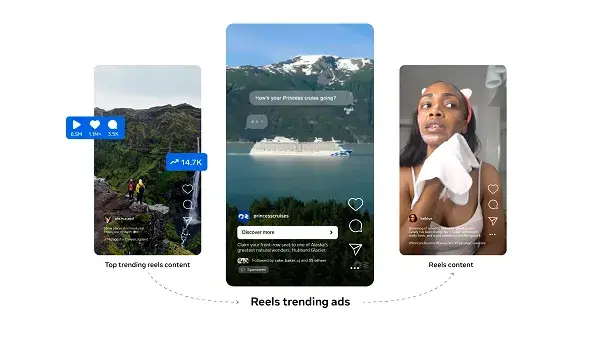
Meta is also adding new trending content categories, including TV & Movies, Travel, Business and Finance & Investments. Meta is also adding more discovery tools to its Creator Marketplace in order to help advertisers to find relevant creators to partner with for promotions.
6. Meta Ordered to Pay US$375 Million in New Mexico Child Safety Trial
A New Mexico jury has found social media giant Meta liable for endangering children by making them vulnerable to predators on its platforms and other dangers.

The verdict came after roughly a day of deliberations following a six-week trial in which the state accused Facebook and Instagram’s parent company of failing to protect minors from sexual abuse, online solicitation and human trafficking. The state had sought the maximum US$2.2 billion in damages, but the jury awarded a lesser amount of US$375 million. The case, tried in a Santa Fe court, is among the first involving social media platforms and child safety to produce a jury verdict.
7. TikTok Adds New Ad Placement Options Offering Higher Exposure
TikTok announced a range of new ad options to help brands boost ad exposure and tap into key trends and opportunities. First is Logo Takeover, a new premium ad format that will give brands the opportunity to co-brand with TikTok when users open the app. It’s somewhat like those themed Netflix logo displays that come up on select shows, with visuals that align a brand with TikTok’s own graphics.
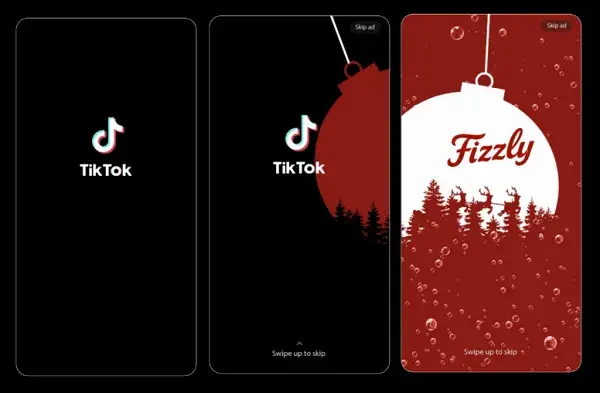
TikTok’s next new option, Prime Time, enables TikTok advertisers to show a series of ads within a limited time frame. TikTok has also added TopReach, which combines two of its other ad options — TopView and TopFeed — into a single offering, in order to help brands maximize one-day reach.
8. TikTok for Business Introduces Campaign to Drive In-App Shopping
TikTok for Business launched a campaign to highlight its evolving in-app shopping push. The new “Watch it. Love it. Want it.” promotion is aimed at showcasing how people increasingly use the app for product discovery and purchase.

The campaign, which will be running across multiple surfaces from this week, aims to capture the essence of TikTok shopping, which is steadily gaining traction in more regions. In-stream shopping is TikTok’s big money-making hope, following the same model that it has in China, where in-app buying has become a key focus and the main driver of revenue for the app’s local version.
9. TikTok Partners With Cameo on Custom Videos
TikTok has announced a new partnership with fan connection app Cameo, which will enable TikTok creators to monetize custom videos within the app. The integration will bring Cameo’s video message request process into TikTok, making it easier for TikTok creators to charge for custom content.

Given the rising popularity of TikTok creators, this could provide a valuable link between the two platforms. The integration will make it easier for TikTok creators to sign up to Cameo and begin charging for custom video clips. It will also enable creators to add customized call-to-action buttons to their TikTok content, making it easy for TikTok viewers to request personalized Cameo videos without leaving the app.
10. New York Mayor Mamdani Puts City’s Government Back on TikTok
Almost three years ago, New York City joined governments across the country in banning TikTok from its phones over security concerns about the Chinese social media site.
However, Mayor Zohran Mamdani has now taken to the app to announce a reversal.

The city will now allow agencies to start posting again on the short-form social media site as long as departments follow a set of security precautions, according to a memo from city cybersecurity officials provided by the mayor’s office. The prohibition was established by Eric Adams, Mamdani’s predecessor, in 2023, as the federal government and many US states restricted the app from government-owned devices over concerns that its parent company, ByteDance, could share data with the Chinese government.
11. Meta Updates Edits With New Fonts, Templates And Better Search Tools
Meta has announced the latest round of updates for its separate video editing app Edits, including new font options, updated templates with motion and improved search tools to link to Instagram accounts.

First, Edits now has a new artificial intelligence-powered font re-style option, which enables Edits users to recreate existing fonts through prompt-based changes. Now video creators will be able to create all-new font options, based on existing text options, by asking the system to generate variations of any font in the app. Edits users can also access an exclusive new font based on the new film “Dhurandhar The Revenge,” which was released last month.
12. Instagram Confirms Live Test of Its New Subscription Package
Meta is seemingly close to launching its next subscription package, with various new explainer pages on Instagram Plus now added to the Instagram Help Center listings.

One of the premium features on Instagram allows users to view a Story — a photo or video that disappears after 24 hours — without notifying the creator. Subscribers can also access insights such as the number of times their own Stories have been rewatched. Additionally, they can create multiple custom audience lists beyond the standard Close Friends option. This gives users greater control over Story visibility, enabling them to share content with specific groups instead of choosing only between all followers or a single limited list.
13. Meta Avoids Motion Picture Association Lawsuit Over PG-13 Ratings
Meta has avoided a potential lawsuit from the Motion Picture Association over the use of MPA ratings standards for content on Instagram. According to a March 31 statement from the MPA, Meta agreed to update its listings to align with MPA requirements.

In October, Instagram outlined changes to its content restrictions in order to make them easier to understand. The move effectively aligned the platform’s content standards with the more familiar movie ratings scales, meaning, for example, that PG-13 would indicate a content setting that is safe for those under 13. Instagram wants to ensure that parents can understand its content rules, and what it allows to be shown in its apps. As such, utilizing this established structure would help provide more familiar context.
14. Snapchat Rolls Out New Ad Options to Help Brands Increase Their In-App Presence
Snapchat has announced some new, high-impact ad options as it looks to drive more ad investment and capitalize on its engaged audience. First, Snapchat announced Total Snap Takeovers, which will ensure that an advertiser shows up in the first ad spot in each tab in the app.

Snapchat is also developing a new promotional option called Offers, which will integrate promotions directly into Snap Ads. In addition, Snapchat announced updates to its Dynamic Product Ads, including new formats such as Multi-Segment DPA. The company is also testing Vertical Carousel Ads and Product-Level Video Ads in an effort to expand its promotional options.
15. Snapchatters Created Almost 2 Trillion Snaps in 2025
Snapchat has revealed that throughout 2025, Snapchatters created nearly 2 trillion Snaps. Snapchat said this equates to 38.5 billion Snaps per week, 5.5 billion Snaps per day and 3.8 million Snaps per minute.

That’s a remarkable feat considering that the app was banned in Russia in early December as part of the government’s push to get more people using its own social media app. Meanwhile, Snap also lost another cluster of users in Australia due to the government’s new under-16 social media restrictions.
16. Snapchat Adds AI-Powered Image-to-Video Generation to Lens Studio
Snapchat will enable AR developers to create their own artificial intelligence-based image-to-video effects. Lens Studio users are now able to integrate five-second AI-generated clips into their Lenses, based on user uploaded photos and developer-defined prompts.

Lens Studio enables creators to work with Snapchat’s AR and AI tools to create new experiences in the app, and this new option provides another way to integrate AI generation into Lens projects. Those projects can then be launched within the Snapchat app. Paying Snapchat Lens+ subscribers can then engage with these new options using Snapchat’s own AI video generation process to generate custom video clips.
17. Snapchat Users Travel More Than Non-Users
Snapchat has shared new insights into how Snapchatters use the app for travel planning by partnering with consumer research platform Suzy to conduct a survey of 1,207 people in order to better understand key travel trends and what influences travel decisions.

The data showed that, comparatively, Snapchat users were more active travelers, with 87% of Snapchatters taking at least one leisure trip per year. That’s 1.2x greater than non-Snapchatters, per the data. Snapchat users were also 1.5x more likely to have taken an international trip in the past year. Snapchatters were also highly social travelers and were more likely than non-users to vacation with partners, friends and family.
18. Pinterest Adds Promote a Pin Option for Marketers
Pinterest added its own form of post boosting with Promote a Pin, which is designed to provide a simple, quick way to amplify the best-performing organic Pins.

The option will give Pinterest users a click-through process to put ad spend behind their Pins, with features including streamlined targeting and budget parameters. Promoted Pins will utilize Pinterest’s Taste Graph targeting to ensure that they’re displayed to the right audience in order to get more eyes on highlighted products. Pinterest has also been developing its own artificial intelligence powered ad tools, called Performance+. These could provide another way to launch ad campaigns without needing in-depth Pin knowledge.
19. X Loses Lawsuit Alleging Advertisers’ Boycott Was Politically Motivated
X’s attempt to prosecute the World Federation of Advertisers for allegedly organizing a boycott of the app has been rejected by a federal court judge in Texas, ending the platform’s effort to pressure ad partners to come back to the app.

As reported by Reuters, U.S. District Judge Jane Boyle ruled that X failed to prove that the WFA sought to enact a politically-motivated boycott of the company, ending an 18-month legal battle over X’s ad woes. Back in 2024, X launched legal action against the Global Alliance for Responsible Media, of which WFA is the chief coordinator, along with selected GARM members, over what X alleged had been a group boycott by competing advertisers of one of the most popular social media platforms in the United States.
20. X Moves X Pro Behind $40/Month Premium+ Paywall With No Notice to Users
Social network X is now limiting X Pro access to customers who subscribe to the X Premium+ plan, which is priced at $40 per month (or $33/month when paid annually). X Pro is a multi-column web interface for managing multiple feeds and lists.

X Pro was known as TweetDeck before Elon Musk bought Twitter, and it was free to use. Before March 26, X subscribers with the standard $8/month Premium plan were able to use X Pro, and now X is requiring a plan that's 5x more expensive. No notice was provided to X Pro users about the change and access was suddenly cut off, leading to multiple complaints on the social network. On its website, X says features included in Premium "are subject to change at any time as we continue to improve the service." The X Help center clearly states that access to X Pro is now limited to the Premium+ tier.
21. LinkedIn Will No Longer Allow Real-Time Livestreams
LinkedIn will no longer allow members to live stream, with users now required to schedule streams in advance if they want to broadcast in the app, as per an announcement on the LinkedIn Live help center page.

According to LinkedIn, the move is about making live content “simpler, more discoverable, and more impactful.” In reality, it’s a subtle but meaningful shift: live video on the platform is becoming less about immediacy, and more about intent. LinkedIn has found that many unplanned streams also go unwatched, so it’s now forcing users to set out a scheduled start time in order to maximize viewership through at least some level of planning.
22. Indonesia Begins Social Media Ban For Children Under 16
Indonesia has begun implementing a new government regulation approved earlier this month that bans children younger than 16 from access to digital platforms that could expose them to pornography, cyberbullying, online scams and addiction.

With the move, Indonesia became the first country in Southeast Asia to ban children from having accounts on YouTube, TikTok, Facebook, Instagram, Threads, X, Bigo Live and Roblox. It follows measures that Australia took last year in a world-first social media ban for children as part of a push for families to take back power from tech giants and protect their teens. Indonesia has said the implementation of the restrictions would be carried out gradually, until all platforms comply with the measure.
Wrapping Up
And that was a wrap of this week’s Social Media Buzz. We’ll be back next week with more news and updates for you from the social media world. Till then, stay tuned!
If you want to read more on the latest developments taking place in the social media space, take a look at ClickInsights’ Social Media Buzz, wherein we bring to you monthly reports on everything going on in social media, ranging from platform updates to policy changes that influence the way we market.


Social platforms change so often that I stopped trusting update summaries on their own a long time ago. New features, new layouts, new promises, and somehow the real experience still comes down to whether normal use feels easier, stranger, or more annoying after the change. That is why I usually look for something more grounded before forming an opinion. Official messaging rarely gives me enough. In that kind of situation, meta reviews helps because user reactions show what the platform actually feels like once the update reaches everyday behavior instead of staying inside a company post.