The Hidden B2B Buying Committee: Navigating Private Slack and Discord Communities

Introduction: Unseen B2B Buying Committee
Today's enterprise-level sales have never been this collaborative. Once a prospect is scheduling a demo with your company, they usually know about your company, understand the product category you sell, and already compare you with multiple competitors. When marketing and sales teams conclude that such insights were gathered via Google and through downloading your website content, they are wrong. Most of the information comes from interactions they do not know about.
Today's B2B buying committee goes far beyond the list of stakeholders who are recorded in the CRM system. Decision-makers consult with peers in private Slack groups, Discord, and other similar private professional networks long before talking to vendors. These interactions affect opinions, validation of purchasing decisions, and shortlist development without leaving any trace in the analytics platform.
With the concept of Dark Social gaining more traction, organizations must understand the role of private Slack and Discord groups for purchasing decision-making. If they engage in these communities effectively, they will be able to build their reputation and trust sooner.

The Modern B2B Buying Committee Has Changed
Enterprise buyers do not make decisions individually any longer. In the modern B2B buying committee, one can find such people as heads of departments, IT personnel, finance people, procurement officers, operations managers, security professionals, and end users. Each member of the committee has their own angle and criteria for assessing vendors.
This approach has resulted in a more comprehensive but complicated buyer's journey. Committee members do not simply assess information provided by vendors, but conduct their own research, exchange experiences, and validate the results.
Therefore, the bulk of the important discussions takes place outside the website of a vendor and its sales process. B2B buyers collect information from industry professionals long before contacting a vendor.
Why Private Communities Have Become Trusted Research Hubs
Increased interest in private communities is connected with changing practices among professionals in gathering data. Consumers face many advertisements and marketing messages daily, which makes it impossible to identify whether some information about professionals is truthful. On the contrary, private communities give an opportunity to freely discuss issues and get recommendations from experts with first-hand experience.
Professionals can trust private communities due to the nature of discussions there. Experts in such communities speak about practical issues instead of trying to persuade people about something. Such discussions cover issues related to implementation, limitations of products, suggestions on credible suppliers, and lessons of doing business in practice. All this gives additional information that consumers cannot get in case studies and marketing materials.
Moreover, private communities promote lifelong learning. Professionals discuss current issues and share information all the time instead of waiting for the moment when they will face problems. That is why community recommendations are so important in the process of purchasing something.
How Slack Communities Influence Enterprise Buying Decisions
Today, Slack has gone way beyond being just an enterprise communication tool. Thousands of specialized Slack communities bring together professionals in marketing, technology, cybersecurity, finance, product management, and any other imaginable domain.
Once a company starts considering purchasing any particular software or service, it becomes customary for business leaders to reach out with their questions through such Slack communities. For example, they might be looking for recommendations on what CRM software, marketing automation tools, analytics solution, or implementation partner to choose. Instead of browsing through vendor websites, people look for recommendations from professionals who have faced similar problems before.
What follows are honest assessments of pros, cons, customer support, pricing, and implementation aspects. The feedback becomes highly valued because it comes from fellow specialists rather than salespeople.
One recommendation in a reliable Slack community can make a company known to scores of potential clients. While such activity won't show up in Google Analytics or CRM reports, it still contributes greatly to sales performance.
This is one of the most vivid examples of Dark Social. The valuable buyer interactions happen in secluded places where marketing software doesn't have access.
The Growing Role of Discord in B2B Decision-Making
Although Discord is mostly related to the game community, it also plays a significant role in many professional communities. Specialists in technology, AI, software development, startups, cybersecurity, and SaaS industry members have turned to Discord in order to exchange opinions and communicate.
Discord enables constant communication through specific channels, live discussions, and collaboration. Users can ask questions and receive answers immediately from professionals, exchange technical information, and get feedback from the audience.
Such continuous communication enables potential buyers to gain trust before deciding on the purchase. In order to evaluate the vendor, buyers do not look at marketing campaigns but analyze their participation in continuous discussions.
Therefore, Discord is yet another example of organic growth of trust for a B2B organization. Buyers can get acquainted with the knowledge of a company during the process of community communication.
Why Traditional Attribution Cannot Measure Community Influence
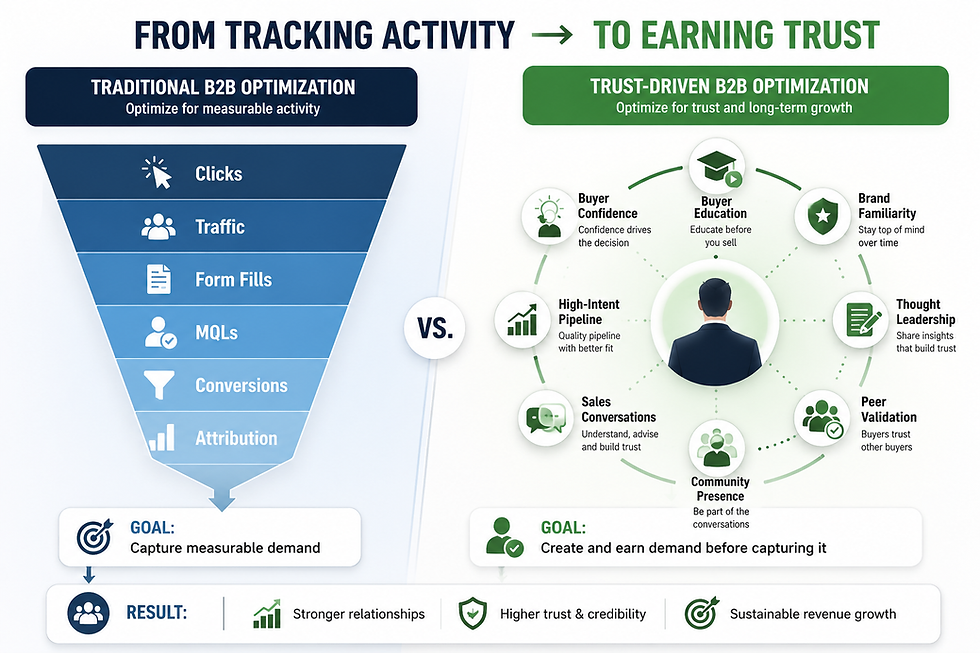
Although the influence of private communities is on the rise, current analytics solutions are unable to assess the extent of their impact properly. Traditional attribution systems use referral links, cookies, tracking pixels, and other forms of digital identifiers to understand the source of traffic. Discussions within Slack and Discord servers do not provide any measurement through such indicators.
A buyer could get a referral within a community, talk about the proposed solution with colleagues and then go straight to the company's website. For Google Analytics, such a visitor would be classified as direct traffic or organic search. Any referral from the beginning of the process goes unnoticed.
This creates an incomplete view of an organization's marketing performance by overlooking how community engagement influences buyer decisions.
It is important to acknowledge this problem. Marketing analytics measures website activity, but it is unable to understand the reasons why buyers visited the website in the first place.
How B2B Companies Should Participate Without Selling
The biggest mistake that most organizations make is regarding communities as just another avenue for advertising. This strategy tends to go badly for most firms since members of a community are highly appreciative of transparency and authenticity.
To successfully engage, one should start by offering value rather than trying to sell. In other words, subject matter experts should provide thoughtful answers, share relevant knowledge, provide useful materials, and engage in the discussion without any ulterior motives.
Founders, executives, engineers, consultants, and even those in customer success departments can build a reputation for a company through continuous assistance to others and help in problem-solving. In this way, one will be able to create a trustworthy image.
It is crucial to be aware of community culture and norms. Each and every Slack space and Discord server is different in its ways. Firms that pay more attention to building relations rather than getting leads quickly are the ones who will earn trust eventually.
Building Community Trust as a Long-Term Growth Strategy
Community involvement cannot be judged solely on the number of immediate conversions and leads. It is valuable in forming buyer decisions in advance, long before buyers enter the sales process.
When professionals consistently get useful information from the same company, it makes the brand associated with reliability and knowledge. Such associations create a sense of trust that helps when evaluating vendors, speaking with executives and recommending to peers.
In the long term, building trust in communities becomes much bigger than just getting good results in the purchase of certain products or services. Happy participants of communities often recommend such companies to their colleagues, speak about them at meetings and use them in other business-related environments. It becomes a chain of organic marketing that any regular advertising efforts cannot achieve.
The organizations that see community involvement as a long-term strategy are more likely to achieve brand authority.
Conclusion: The Conversations That Shape Enterprise Buying Decisions
The contemporary B2B buying committee goes way beyond the boardroom and procurement sessions. It is made up of trusted colleagues, subject matter experts, and professional communities that assist buyers in analyzing solutions before any vendor even learns about the opportunity.
Private Slack groups and Discord communities have turned out to be knowledge sources that facilitate the sharing of recommendations, implementation experience, and purchase decision validation among professionals. These conversations might never show up in the marketing dashboards, but they decide the vendors that will be seriously considered.
In light of Dark Social continuing to impact the B2B buying process, businesses need to reconsider how they develop their influence. In addition to marketing efforts, they need to consider participating, developing expertise, and building relationships within professional communities.
The organizations that will stand out will not necessarily be the ones that carry out the loudest marketing activities. They will be the ones that earn trust in the professional communities where buyers make their decisions.


Really interesting perspective on how private communities influence B2B purchasing decisions.
The point about Dark Social being difficult to track but highly influential is especially valuable.
For a casual community activity, an imposter game word creator could also be a fun way to engage members.