Social Media Buzz Weekly: Roundup of Social Media Updates

Welcome to Social Media Buzz Weekly, your weekly bulletin of the latest social media updates. With the social media landscape evolving with each passing day, it can be challenging to keep a tab on the rapid developments. Well, not anymore, as we have taken it upon ourselves to keep you abreast of every happening in the social media space.
So, without any further ado, let’s look at some of the most significant developments from the last week in the world of social media.
1. Meta Updates Its Livestream Shopping Tools
Meta has announced a range of updates to its livestream promotion options, which are focused on driving more shopping activity within live broadcasts. First, Meta is expanding its live video ads to Instagram, and launching them globally on Facebook.

Facebook has had variations of livestream ads available for some time. This latest iteration provided livestream promotions that link to an actual broadcast, as well as in-stream product tabs that link to purchase options on other sites. The expansion will give broadcasters more ways to drive audience engagement and boost in-stream promotions and shopping activity. Meta is also working with live commerce platforms including CommentSold, Firework, LiveMeUp, Sprii and TalkShopLive to power shopping promotions in livestreams. Meta is also adding new live shopping tools on Facebook. These will enable marketers to display a selection of promoted products during a broadcast.
2. TikTok Shop Bans AI-Generated Voices in Shopping Livestreams
TikTok Shop has banned AI-generated voices, prerecorded audio, and static-image content from promotional livestreams and shoppable videos. The policy applies to all sellers and creators running promotional content on the platform.

Under the updated rules, all verbal communication during a livestream must occur in real time, either spoken or signed. Still-frame content may not cover more than 50% of the screen. Sellers who violate the rules face commission restrictions, content removal, and account bans, enforced through TikTok’s Creator Health Rating system. The prohibited formats include AI-generated voices, audio recordings used as narration, radio-style audio tracks, slideshows, looping footage, screen recordings, and screenshots of product detail pages.
3. TikTok Partners With Fitness Tracking App Strava
TikTok is looking to promote physical activity and community participation, partnering with fitness tracking app Strava to launch a 100,000 euro (about $114,000) pan-European Local Movement Fund, which aims to empower local clubs and groups by providing funding and ad credits to 20 creator-ambassadors who will serve as champions for local fitness groups.

Running and fitness have become significant trends on TikTok, with people sharing tips, progress notes and inspiration, and subsequently driving solid engagement in the app. Now, TikTok wants to extend that to practical community initiatives, in an effort to garner support through positive development, and to further promote participation via the app. TikTok will launch custom TikTok Run Club merchandise, as well as other products to help promote participation.
4. Instagram Expands to Samsung Smart TV
Instagram has announced an expansion of Instagram for TV to Samsung Smart TVs in the U.S. In addition, the platform is also testing connected TV viewing features, including personalized channels, Stories for TV and horizontal video.
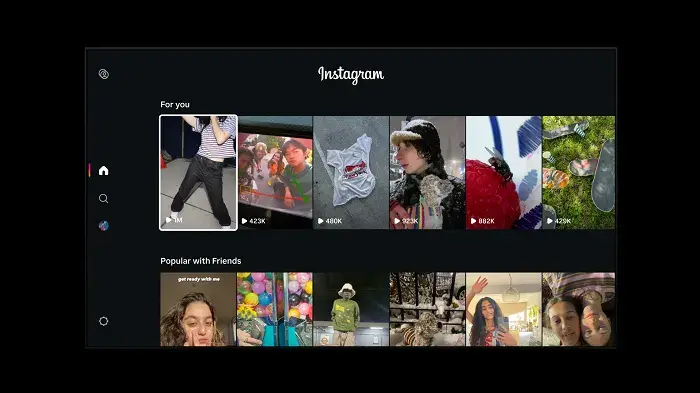
Instagram said that the expansion to Samsung Smart TVs means Instagram’s updated TV app is available on the majority of connected TV devices in the U.S. Instagram launched its revamped TV app for Amazon Fire devices in December 2025, with the improved connected TV experience taking cues from YouTube’s TV app. Connected TV has been one of YouTube’s fastest-growing usage segments, and Shorts viewing on TV now makes up 15% of all U.S. Shorts consumption in YouTube’s app. The majority of Instagram’s growth in time spent in the app has been due to Reels consumption. Given the trend towards short-form viewing via CTV, the company clearly sees an opportunity to build on this. Instagram expanded access to its CTV app to more devices in February.
5. Snap Opens Pre-Orders for Specs AR Glasses
Snap announced the official launch of its Specs augmented reality glasses, which could make the company a key player in the next stage of wearable computing and interactive digital experiences.

The glasses are available for pre-order and will ship in the U.S., France and the U.K. later this year. According to Snap, Specs are a "wearable computer built into a lightweight pair of glasses" designed to bring digital experiences into the real world. Specs come in two sizes, with the 47 mm model weighing 132 grams and the 52 mm model weighing 136 grams. Removable inserts support a wide range of prescriptions. Snap said it has invested across the augmented reality stack, including displays, optics, computer vision, hardware, developer tools and its operating system, and has filed more than 7,000 patents during the development of Specs.
6. X Adds Google Tag Manager Integration
X wants to make it easier for ad partners to monitor the performance of their campaigns, via a new integration with Google Tag Manager that will enable expanded, simplified event tracking.

Google’s Tag Manager enables marketers to deploy and manage marketing and analytics tags without modifying website code. By adding a GTM code to a website, marketers can manage tracking tags using a centralized process. Now, marketers will be able to add X’s tracking tags via this same process. So now, X advertisers will be able to track more specific performance insights, including direct conversions stemming from their X ads. X said this updated process will make it easier for advertisers of all levels of technical expertise to implement performance tracking.
7. Microsoft Expands Linkedin Seniority Targeting To More Ad Objectives
Microsoft will now enable advertisers to target audiences based on LinkedIn profile data within Search and Audience campaigns, providing enhanced focus and improved reach options. Microsoft’s expansion will enable marketers to target users based on 10 levels of seniority, as listed in their LinkedIn profiles.

The update introduces 10 standardized seniority levels drawn from LinkedIn member profile data: CXO, VP, Director, Manager, Senior, Entry, Owner, Partner, Training, and Volunteer. Advertisers can apply these levels at both the campaign and ad group level, reached through two places in the Microsoft Advertising interface: the Settings tab via the Edit target categories option, and the Demographics tab. The capability is live in 29 markets across the Americas, including the United States, Canada, Brazil, and Mexico, four EMEA markets (Egypt, Nigeria, Saudi Arabia, and South Africa), and 10 Asia-Pacific markets including Australia, India, and Japan. Major Western European markets such as the United Kingdom, Germany, and France are not part of this rollout.
8. LinkedIn Launches AI Training Courses for Marketers
LinkedIn has partnered with Adobe to launch a new series of artificial intelligence training courses for marketers. The program is designed to teach marketers the fundamentals of AI usage, as well as how to best use the latest AI advancements in order to improve their outputs.

LinkedIn said its AI Essentials for Marketers courses, which will be hosted within its LinkedIn Learning platform, are designed to help marketing professionals “develop the AI skills that matter most to their roles.” The initial courses will focus on how the latest AI tools can assist with digital marketing programs, content creation, social and communications elements and data and analytics. Those who complete the courses will earn LinkedIn Learning certificates that they can display on their LinkedIn profiles. LinkedIn said the courses have been designed by its newly formed BrandWorks team, which aims to provide hands-on strategy and creative support to LinkedIn ads customers.
9. LinkedIn Adds GIF Support
LinkedIn has added GIF support within its comments, providing another way to respond to posts. This feature provides a simple way to select and add a moving image to post replies.

LinkedIn has long supported GIFs in its messaging option. Meanwhile, marketers can also use GIFs in single-image ads. But using them in the main feed has generally required some extra work, in that users have to convert a GIF to an MP4 video file first, in order to make it actually play in-stream. But now, GIFs are an option, which could at least give people an alternative to the basic animations that LinkedIn users include in job announcements and the like.
10. LinkedIn Announces The Addition of Collaborative Posts
LinkedIn has announced a collaborative posts feature, which will enable creators to invite other LinkedIn members to be co-creators of in-stream posts.

LinkedIn’s collab posts will be accessible via a new Add Collaborators option within post settings, accessible via the composer options. Users will then be able to invite other LinkedIn users or company pages to partner on posts. Collab posts also provide another means for brands to tap into the value of member networks, which generally drive more reach than company page posts. It’s the latest in the platform’s broader push to lean into creator monetization. LinkedIn had previously launched its own Creator Marketplace to help brands find relevant LinkedIn creators to work with on promotions. The app also allows brands to sponsor user posts.
11. Social Media is The Leading Source of News, as per Reuters
A Reuters study has found that people rely on social media for news more than TV or news websites, with TikTok and Instagram influence increasing. Reuters Institute published its 2026 Digital News Report, which looks at the state of the current information ecosystem and how people are getting their news.

Based on survey data from more than 85,000 respondents across 48 regions, the annual Reuters Institute report provides a snapshot of modern news consumption, as well as the key factors that influence opinions. Unsurprisingly, social media is now the key driving force, with more people saying that social platforms are their most-used news source daily. Social platforms now lead TV and news websites in overall news distribution, with more people relying on discovery within social apps over other digital input options for their informational intake.
12. Norway Enacts Near AI Ban for Junior School Pupils, Curbs Use for Older Children
Norway is imposing a near ban on the use of generative AI tools by junior school pupils while also restricting their use in the education of older children to prevent a negative impact on learning, the country’s prime minister has said.

Using artificial intelligence increased the risk that young children skip important steps in their education, Prime Minister Jonas Gahr Stoere told a press conference. Pupils from first through seventh grade, aged 6 to 13, should as a general rule not be using AI, while those in lower secondary school, aged 14 to 16, could cautiously adopt tools under teachers’ supervision, the government said. In upper secondary education, from ages 17 to 19, students should learn to use AI appropriately so that they would be prepared for further education and work, it added.
Wrapping Up
And that was a wrap of this week’s Social Media Buzz. We’ll be back next week with more news and updates for you from the social media world. Till then, stay tuned!
If you want to read more on the latest developments taking place in the social media space, take a look at ClickInsights’ Social Media Buzz, wherein we bring to you monthly reports on everything going on in social media, ranging from platform updates to policy changes that influence the way we market.


pikashow is a convenient destination for viewers looking for entertainment variety. i enjoy how pikashow keeps content easy to access and explore. navigation is straightforward and pleasant. overall, pikashow remains a dependable platform.