Subjective Purchasing: Uncovering the Hidden Influence Network in APAC Deals
- ClickInsights

- 3 days ago
- 7 min read
The Signatory Might Not Be the Decider
An APAC enterprise deal might seem like a clear process when put in writing. There is a budget holder, there is the procurement team, there are technical evaluators, there are the users, and there is the boss who seems to make the ultimate decision. The vendor plans the stakeholders involved, addresses their needs, sends his proposal, and believes he is proceeding smoothly with the deal. But suddenly the deal is stalled. The offering complies with all the requirements, the price is competitive, and the ROI is strong.
Nevertheless, some unexpected objection comes from the buyer's side, making the deal stall out of nowhere. What is going on? The issue is not about the solution – it might be about the influence. This is the nature of subjective purchasing in APAC enterprise dealings. Buying committees are a good framework to consider; however, they do not always show all the personal connections, trusted sources of information, opposition, and motives for making the final purchase decision.

Myth of the Objective Buyer
Enterprise procurement attempts to structure and rationalize the purchasing process. The buyer compares the price, features, technical capability, security, implementation, and expected ROI. The procurement team might even use scoring models to rate the vendor based on predetermined criteria. This is all very useful, but it will not make the process objectively driven because there is always going to be human input in the decision.
The CEO can choose a vendor simply because they have faith in their management team. The technical expert can discount a solution just because there has been a failure in one of its implementations before. The manager can reject the project because it is going to break some well-established process.
The internal champion can support the vendor because they think that the solution can address their long-term business issue. All these aspects can never be found in an RFP. Subjective purchasing does not mean that buyers are irrational. It means that human judgment works together with the objective approach.
The Buying Committee's Hidden Influence Network
The formal buying committee typically determines the people behind the evaluation and approval of the purchase. However, there can be a broader buying influence network than just the official participants of the buying process. In the case of a big technological purchase, for example, the CIO may manage the budget, procurement will handle the negotiation of the deal, IT will verify its technicalities, and the business heads will outline expectations from it.
But whom does the CIO ask for an opinion on whether the vendor can deliver what he needs? That can be a technical architect, a regional head, an old executive, or any other respected person within the company who never sits in vendor presentations. They don't have the official purchasing power, but their input can carry a lot of weight.
The hidden influence network consists of the people who can impact confidence, develop resistance, validate assumptions, and influence consensus. The knowledge of that network is crucial since the people participating in the formal buying process are not necessarily the people who influence the perception of the deal.
Formal Authority vs. Informal Influence
One of the most essential distinctions in complex enterprise sales is that between formal authority and informal influence. Formal authority means the right to make a decision and approve, disapprove, or sign a transaction. Such formal authority can be held by an executive, procurement officer, or budget controller.
Informal influence means the power to influence and persuade other people who are in possession of formal authority. For instance, an executive may have authority to make a decision concerning investment in a particular technology, while the head of the technical department convinces the executive that this solution is too risky to be implemented in practice.
In this situation, the technical leader does not have any need to sign anything, but their informal influence is enough to affect the outcome. The reverse situation can also take place: the presence of an influential internal champion may convince senior executives of the business case despite the lack of any presence of the salesperson.
Formal Authority | Informal Influence |
Can approve or reject the purchase | Can shape the decision without approving it |
Controls budget or procurement | Influences trusted decision-makers |
Often visible on the org chart | May be invisible on the org chart |
Signs or authorizes the deal | Builds confidence or creates resistance |
Easy to identify | Requires relationship and context mapping |
Why Subjective Factors Matter in APAC Enterprise Deals
The importance of subjective factors becomes particularly pronounced where significant uncertainties and changes accompany the process of making enterprise purchases and long-term relationships between vendors and customers need to be created. While a customer can make an assessment regarding the appropriateness of technology provided by the vendor, they can also wonder whether the vendor understands the customer's environment.
Will the implementation team be responsive? Will there be ongoing engagement from the leadership? Can the vendor be relied on when things go wrong? These issues are difficult to summarize in a procurement score. Understanding the APAC environment is relevant, but one needs to be very careful here.
The APAC region is not one business environment. There are numerous countries in it – Singapore, Indonesia, Malaysia, Thailand, Vietnam, Philippines, and others that have different business environments, institutions, industry dynamics, and organizational culture. Very formal procurement processes characterize some firms, while others may prioritize relationships and reputation. Often, both formal processes and relationships coexist in the organization.
Mapping the Hidden Buying Committee
An old-school account map usually starts off with one simple question - who is the decision maker? In complex APAC deals, it takes deeper reflection to map out the right people. It is important for the seller to understand who owns the budget, who owns the problem, who holds technical authority, who has influence over the executive decision makers, who is capable of creating any resistance, who stands to benefit from the decision, and who bears the risk should the deal fail.
This map will expose the influence map that lies underneath the buying committee. The individual who has ownership of the budget is not necessarily the person who cares most about the problem being solved. The technical evaluator does not have to control the purchase, but they could have a significant impact on the decision of the executive decision makers. A department head could be someone who does not have any procurement power, but they could cause internal resistance. An employee who has to implement the proposed solution could be very resistant.
Political Resistance: The Influence That is Not in the CRM
There are some of the most significant purchase indicators that you will never see in the CRM. The stakeholder may be attending all meetings but, at the same time, oppose the deal. They may promote the solution in public and fail to do so in private. A department manager may oppose the purchase because it threatens some process, shifts responsibilities, or brings uncertainty to their team.
Such political resistance may be observed in any business environment, and the APAC market is no exception. The problem with such resistance is that it always remains invisible till late in the process. By the time procurement issues come up, the resistance may have existed for weeks. The successful seller should know not just those stakeholders who support the purchase but also those who are threatened by it, those whose interests clash, and those who can affect the decision.
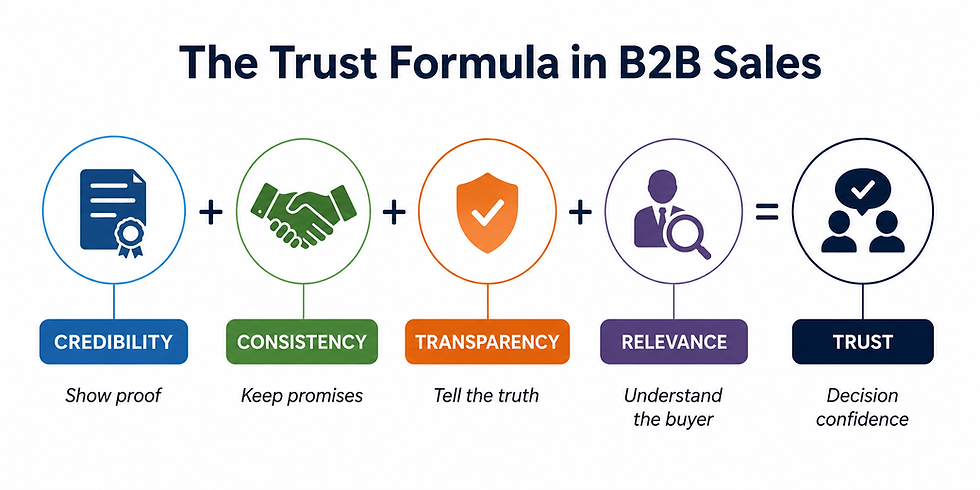
Why Trust Determines Whose Opinion Carries Weight
While it is common for there to be many people within the organization who hold influential positions, the degree to which each person has been trusted varies greatly. Even when comparing two individuals who have been equally senior in the organization, it is very common to find that one person's opinion holds more weight than the other.
Such differences are influenced by the level of experience, technical skill set, organizational credibility, or the fact that they have built a long-term relationship with top management. It is at this point that the concept of trust and relationship becomes relevant to subjective purchases.
The reason why this becomes necessary is that if the opinion of the individual is trusted by the executive, then the recommendation provided by the individual becomes very significant in the way the vendor is assessed. The critical issue here is not just about who is more senior but rather whose opinion the decision maker trusts.
The Limitation of AI Mapping the Human Decision Network
AI can increase account mapping's efficiency immensely. AI can recognize job titles, decipher the structure of reporting, observe attendance at meetings, analyze communications, and discover patterns of involvement.
All these abilities can help sellers recognize key stakeholders and manage large amounts of account data. Yet, visible data will never tell the whole story about the human decision network. AI can recognize who attends the most meetings but might not know who an executive’s trusted source of information is. AI can observe communications between stakeholders but doesn't fully grasp the history of such connections. AI can recognize the position of a person but cannot decide whether the position implies informal influence on its own.
Most importantly, AI may find it hard to discover why a certain person supports or dislikes a vendor. Here, human sellers will always be useful. Technology can manage visible data, yet people can decipher the meaning of such connections, incentives, reputation, and other context behind them.
Conclusion: Map the Influence Network, Not Just the Org Chart
Even a complicated APAC deal can fall apart despite having a great product, good pricing, and an apparently supportive purchasing team. It's not always about the offer. Instead, it's the seller's interpretation of what makes the purchase happen. The person signing the contract may not be the one making the decision. The one saying the least during discussions may wield considerable influence. The internal advocate might prove to be more valuable than the highest-ranking contact.
The silent but powerful resistance group can sink months' worth of efforts. For that reason, enterprise sellers have to know more than just authority. In addition, they should understand the concepts of subjective purchasing, hidden influence networks, informal ties, political opposition, and trust. However, this does not imply ignoring the procurement department or using people in the wrong way. Rather, this involves gaining a better idea of how decisions are made in complex companies. The organizational structure shows you where the power lies. The influence network reveals how the decision process actually works.


Comments