The Next Era of B2B Growth: Optimizing for Trust Instead of Tracking
- ClickInsights

- 22 hours ago
- 5 min read
How the Next Era of B2B Growth is Changing
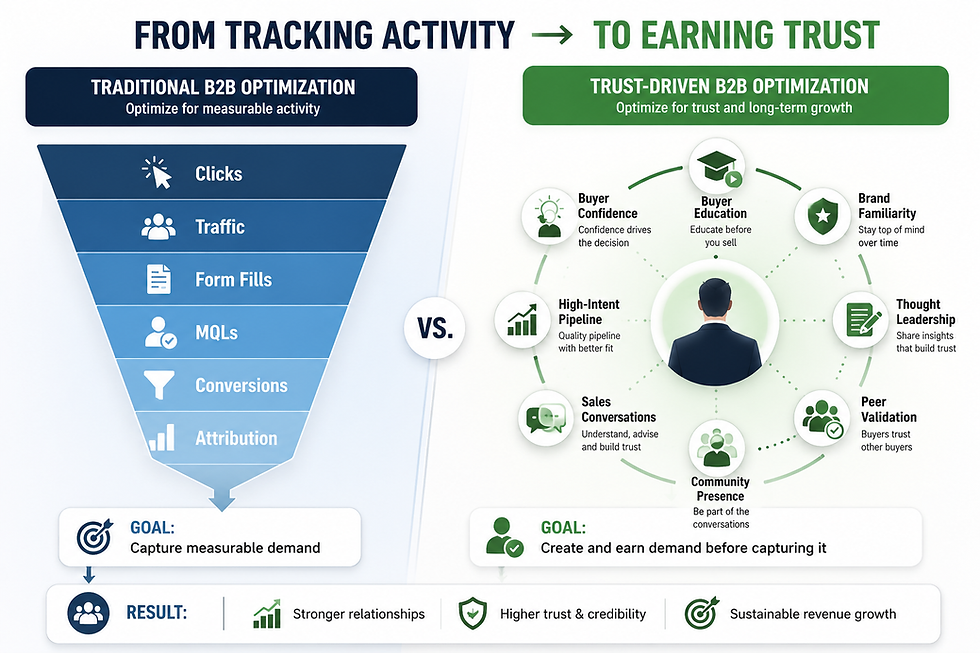
The past several years have seen B2B marketers focusing on quantifiable performance. Optimization of campaigns was done based on clicks, website visits, conversions, leads, etc., because all of these things were quantifiable. Attribution software allowed organizations to see which channels worked well for measurable results.
But buyers' behavior evolved much faster than the measurement models could account for. Today's buyers conduct research using LinkedIn thought leadership pieces, podcasts, professional networks, peer recommendations, and other educational content well before they engage with Sales. Much of their activities happen via Dark Social, meaning that there is no way to track it in the attribution software.
In order to succeed in the Next Era of B2B Growth, companies should keep optimizing their efforts and measure their performance, but at the same time realize that trust and credibility building and buyer education occur well before measurable results appear.
The Modern Buyer Journey Has Transformed B2B Growth
The classic buyer journey was simpler. The buyer would be made aware of the business through advertisements, SEO, or campaigns and then go to their website, fill out a lead form, and move into the sales funnel. Since most interaction happened within the channel, it was possible to know the effectiveness of marketing thanks to attribution software.
However, the modern buyer journey is quite different. Often, a buyer spends weeks or even months looking for information without even visiting the website of the vendor. They read articles from industry thought leaders on LinkedIn, listen to podcasts, join closed communities, watch video tutorials, and ask for opinions from their peers. Moreover, the committee that makes the purchase may talk about potential vendors long before any interaction with the company website.
This impacts their decision but does not leave any measurable trace. Traditional attribution captures only the final stage of the buyer's journey, leaving earlier interactions unaccounted for.
Organizations that acknowledge this change can create marketing strategies based on the true buyer journey rather than just what the software sees.
Optimizing for Trust Instead of Tracking
One of the main takeaways from this report is that good marketing starts with gaining people's trust. Buyers do not select an organization based on one ad and one content piece. Buyers gradually start trusting an organization as a result of repeated exposure to valuable information, reputable experts, and educational experiences.
An organization builds trust by offering educational information before requesting a deal. Building thought leadership among founders, advocating on behalf of employees, writing educational articles, creating zero-click content, launching podcasts and webinars, and engaging in professional communities all add to better relationships with buyers. Rather than interrupting buyers with promotions, these activities are designed to help buyers overcome challenges and make better decisions.
This is a move away from optimization for metrics to optimization for experience. Clicks and conversions are important, but not the sole measures of marketing effectiveness. Companies that constantly offer value to their buyers before they are willing to buy become the companies remembered during the buying process.
Trust is not gained through one marketing activity, but through constant educational efforts.
Measuring What Matters With a Hybrid Attribution Approach
Opting for trust does not have to exclude measurement. Measurement is crucial to performance tracking, campaign optimization, and showing how marketing contributes to growth. But it is crucial to ensure that measurement encompasses the whole journey of the buyer rather than just measurable parts of it.
The Hybrid Attribution Model makes use of both quantitative and qualitative insights. Marketing analytics, CRM data, and attribution reports remain sources of great performance metrics. They are enhanced by self-reported attribution, sales discovery sessions, customer feedback, and qualitative buyer insights that tell the hidden story of what drives buying decisions.
With such an approach, it becomes possible to answer two key questions. The former concerns what the buyers did thanks to quantitative data; the latter, why they did it with qualitative insights. Both provide a more accurate picture of how demand generation and revenue opportunity development happen.
In other words, the goal here is not to exclude analytics but to supplement them with those insights that software is unable to get.
Organizational Alignment Will Drive Future Revenue Growth
Modern B2B growth requires collaboration within the company. Marketing, Sales, RevOps, and leadership have important insights regarding the buyer journey, but the best results are achieved when all teams collaborate toward common goals.
Marketing creates awareness via content marketing, thought leadership, employee advocacy, and demand generation. Sales learns the qualitative aspects of the buyer journey during discovery calls and verifies what has motivated buyers to make their purchase decisions. RevOps gathers quantitative data and buyer insight and uses this knowledge to generate reports that influence strategic decision-making. Leadership leverages the gathered information in resource allocation and business performance analysis.
Common KPIs like high-intent pipeline, revenue contribution, quality of customer acquisition, and self-attribution motivate departments to strive for the same business outcomes.
The alignment around the full customer journey helps companies to collaborate better, make more informed decisions, and achieve greater success from marketing spend.
Embracing the Unmeasurable as a Competitive Advantage
One of the key findings of this report is that high-value marketing actions are not always easily measurable. This should not dissuade organizations from engaging in these activities but rather provide a greater awareness of the way modern buyer journeys evolve.
Brand initiatives such as founder thought leadership, employee advocacy, education, podcasts, community involvement, and professional networking have a significant impact on the buyer journey even prior to any measurable engagement. While attribution software cannot measure every action, these efforts create familiarity, credibility, and trust.
Organizations that assess all marketing initiatives in terms of dashboard metrics miss out on the value of some of their most important demand generation efforts. By combining both quantitative metrics and qualitative buyer insights, they get a better grasp of how these programs affect the future pipeline and revenue.
In a community-based B2B world, embracing the unmeasurable is a competitive advantage since it motivates organizations to invest in relationships and not just measurable transactions.
Conclusion: The Next Era of B2B Growth Belongs to Trust-Driven Organizations
The Future of B2B Growth is not about better analytics technology alone. It is about companies that understand how today's buyers find out about, evaluate, and ultimately trust potential vendors even before engagement begins.
The single message that was consistently conveyed in this report is that Dark Social has transformed the buyer journey; Hybrid Attribution offers a new way of measuring marketing efficiency; and demand creation requires the building of trust before demand capture takes place. Marketing, sales, revops, and executive teams can perform better when their activities are aligned to the entire customer journey and not to metrics alone.
The future leaders will use analytics, but they will also know the importance of conversations with buyers, qualitative insights, community involvement, and brand building over time. They will offer education before offering to sell anything; they will create value before creating hype; and they will focus on building trust throughout the buyer journey.
In the years to come, it will not be about tracking every interaction, but about earning the trust of buyers. This is the key to The Next Era of B2B Growth.


Comments