Why Your "Direct Traffic" Spike is Actually a Dark Social Win

Introduction: The Marketing Metric Everyone Misunderstands
An uptick in direct traffic always appears to be positive news. The marketing department interprets it as more customers being able to access the URL of the company directly, whereas the executives interpret it as an indication that their brand awareness is increasing. The data seems like great news on its face.
What if there was more to it than you saw on your analytics dashboard?
In the modern B2B space, a lot of the direct traffic is not "direct" at all. Enterprise consumers usually hear about the company for the first time through podcasts, discussions on LinkedIn, private Slack forums, WhatsApp chats, or from trusted colleagues. By the time they go to your website, the impact has already been made. Sadly, most of these touchpoints cannot be connected to that last website visit by the analytics platform you use.
Dark Social changes the way you interpret your direct traffic data.

What is Meant By Direct Traffic?
The definition of direct traffic in web analytics is the website traffic that does not have an identifiable source. It has always been considered to be the website visits through typing the web address, going through the bookmarked pages or saving the link in any way.
Although these are the factors that contribute to direct traffic, they constitute just one part of the whole definition. Modern web analytics tools mark visits as direct traffic even when there is no possibility of tracking the source of the visit. If there is no referral info available or it is somehow erased by the time the buyer reaches your website, the visit will be counted as direct.
It leads to another misconception among many marketing departments. They believe that each increase in direct traffic is associated with increased brand recognition only. In fact, direct traffic can also include those people who were previously exposed to other channels, which could not be measured in traditional ways.
Therefore, the direct traffic answer to where the buyers found out about you is just the endpoint of a longer process.
The Hidden Journey Behind a Direct Visit
It's unlikely for an enterprise customer to make any purchases based on one touchpoint. Instead, there will be multiple stages of discovery before the customer lands on the vendor's site.
Consider a Chief Marketing Officer who listens to a podcast on the way to work in the morning. The guest speaks about the problem the executive faces and provides a new point of view on it. A couple of days later, another leader mentions the company's post on LinkedIn privately. A week later, someone else from the invite-only Slack community mentions the solution in relation to other business issues.
Over the coming weeks, members of the buying committee swap articles, share implementation stories, and evaluate different vendors among themselves. Eventually, one stakeholder will do a branded search or type in the URL to find out more information about the company.
Google Analytics will track this visit as a direct visit.
However, what Google Analytics doesn't track is everything that led to this point. Podcast, community mention, private conversations, and internal discussion all influenced the decision process but aren't included in the traditional attribution models.
This visit to the website does not mark the start of the customer journey. It marks the conclusion of the journey before contacting Sales.
Why Dark Social Is Driving So Much Direct Traffic
Dark Social has completely altered the way that enterprise buyers discover companies. Rather than discovering companies through search engines or through advertising, buyers are now placing their trust in referrals made in dark environments.
Business communities such as Slack and Discord have become important venues for business executives to discuss problems and share recommendations for vendors based on real-world experiences. These types of interactions do not produce referral information but can very well result in a visit to the website at a later date.
Messaging apps are another critical factor here. Executives share news articles, vendor recommendations, and even recordings from events via LinkedIn messaging, WhatsApp, Microsoft Teams, and email. Since these interactions occur in a dark environment, there is no way to see how they drive website visits using attribution software.
Educational content represents yet another key motivator. Podcasts, webinars, and YouTube videos help companies build credibility way before the potential buyer is ready to consider engaging. A potential client will remember a great interview or a presentation months ahead of actually starting to search for the respective brand. Once a direct visit occurs due to the search performed, the origin of influence vanishes from the analytics picture.
Offline conversations have the same effect. Discussions held during conferences, networking events, customer roundtables, and executive meetings drive buyers to a business website in the future. Although such conversations affect purchase decisions, there is no way to trace their digital footprint.
The Problem with Misinterpreting Direct Traffic
Interpreting direct traffic incorrectly results in poor marketing decisions on the part of organizations.
As soon as a company starts attributing visitors to the last touchpoint, its marketing strategy changes. Marketing professionals start to spend more money on channels that seem measurable, but ignore the channels that generated the interest. Marketing leaders decide to invest less money in podcasts, executive thought leadership, community engagement, or educational content as they generate fewer measurable conversions.
On the contrary, marketing departments increase investments in campaigns generating measurable clicks.
That paints a skewed picture of marketing performance because companies optimize themselves based on what they know from their dashboards rather than understanding what affected the buyers' decision-making process.
One of the most effective ways to market a business and strengthen its brand is often overlooked because it cannot be measured through traditional attribution models.
How Marketing Teams Should Rethink Direct Traffic
Instead of treating it as a solution to everything, marketers should see it as an indicator.
When there is a rise in direct traffic, it means that there is increased brand awareness in some unmeasurable marketing channel. The difficulty is figuring out what affects it.
Leading-edge companies merge quantitative data analysis with qualitative data collection. They ask customers how they came to learn about the organization, get the sales team to log buyer interactions and contrast traffic trends with the number of podcasts, interview appearances, webinars, and other major content initiatives.
This more comprehensive approach allows marketers to learn not just where the visitors come from but also what made them start engaging at all.
The key here is not to limit the view to a single attribution source. Businesses should try to develop a more holistic view, which involves analyzing not only the software but also customer feedback.
Turning Direct Traffic into Actionable Insights
Direct traffic becomes significantly more useful when businesses try to dig deeper into the story behind numbers.
Sales reps can start each discovery call asking a prospective client about what brought them to the company in the first place. Often enough, such questions can give insight into the factors that were never mentioned in marketing reports. A buyer may say that they listened to the founder's interview on a podcast, got recommendations from co-workers, or saw the discussion going on in some private community.
Marketing professionals should try to spot trends rather than focus on single metrics. For example, any increase in direct traffic after the presentation at a conference, executive interview, or viral LinkedIn post shows that such activities contribute to pipeline generation much more than it was originally thought.
Conclusion: Your Dashboard Only Tells Part of the Story
Any increase in direct traffic should neither be overlooked as an anomaly nor understood simply as increased brand awareness. Rather, it usually demonstrates the effectiveness of past conversations, referrals, and information that occurred long before a potential customer came to your site.
Dark Social tells us that when it comes to enterprise buying, decision-makers do not make up their minds with one click. They gather insights through connections with peers, private forums, podcast listening, video consumption, and network activities before they ever appear on your dashboard.
It's the enterprises that will succeed in this new reality by ceasing to think of direct traffic as the last word on where visitors are coming from, and starting to see it as the result of some hidden influence. Rather than wondering, “From where did this visitor come?” they will start asking, "What made this buyer find us today?”
And this will help them build better attribution models.

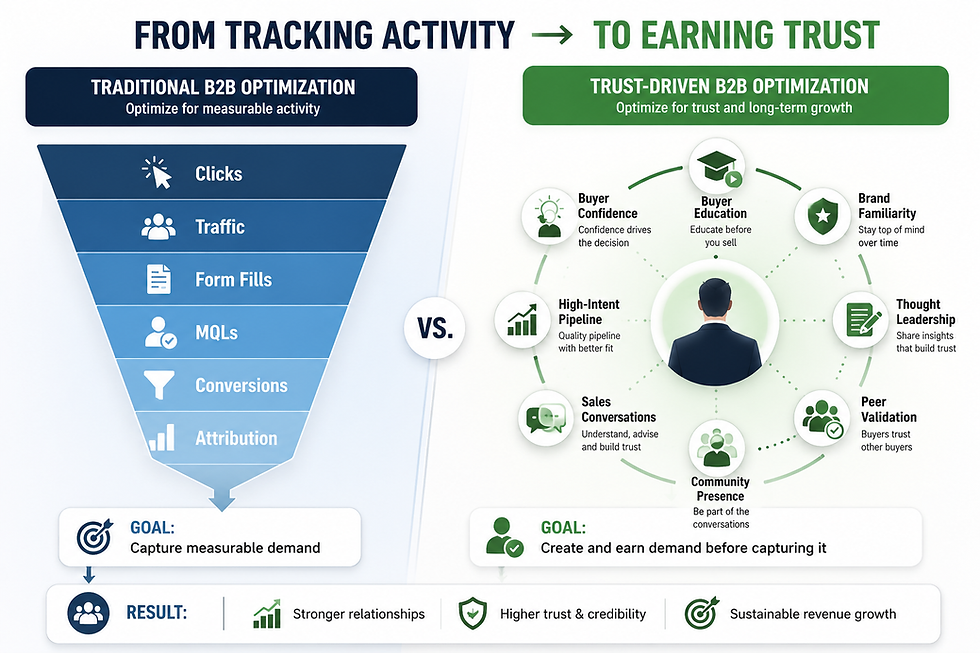

A rise in direct traffic can easily come from private sharing, podcast mentions, or LinkedIn conversations that analytics can’t attribute properly. Instead of dismissing those visits as untraceable, I’d have Vladenza build consistent linkedin marketing around the founder’s expertise, opinions, and useful case-based posts. That creates more material people can share in DMs or team chats before eventually visiting the site. I’d also use tagged links where they fit, ask new leads how they discovered the brand, and compare branded-search growth with posting activity. Perfect attribution isn’t realistic, but credible demand can still be created intentionally.