"How Did You Actually Hear About Us?": The Most Important Field on Your Lead Form

Introduction: The Most Valuable Question You're Probably Not Asking
A potential client fills out the demo form on your website. The lead source gets automatically populated with Organic Search, Direct Traffic, or Paid Search in your CRM. Marketers attribute the conversion to the given channel, and move the lead to the sales pipeline. It seems pretty clear.
The discovery call with the prospect starts.
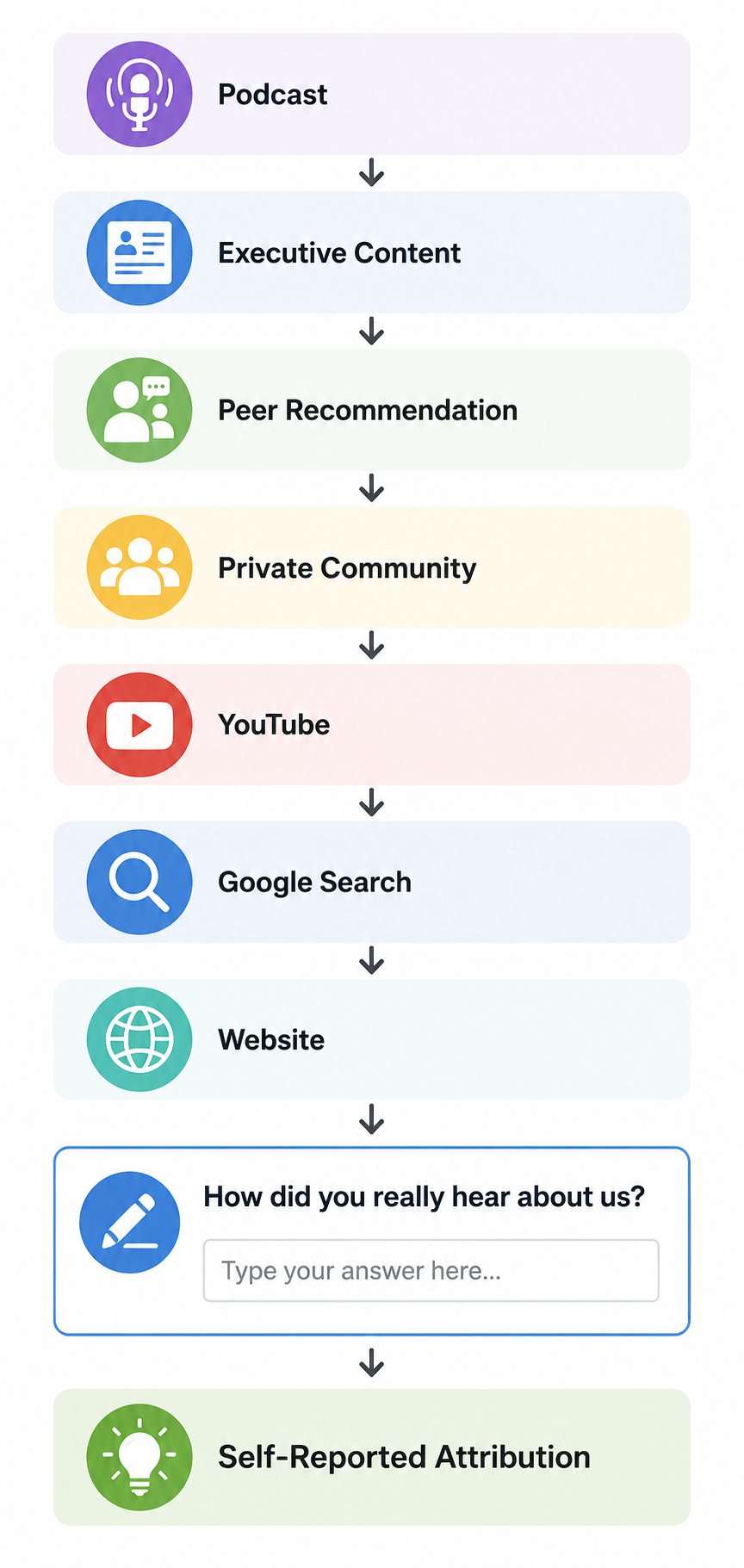
Asking the lead about their path to getting acquainted with your company, the salesperson receives an absolutely different answer than that given by the marketing dashboard. The prospect says that he got to know about the CEO via a podcast, followed your LinkedIn activity for months, got recommended by his friend, and only then found your website to fill out the demo form.
All those influences remain invisible in the attribution dashboard.
It is precisely because of this attribution gap that one simple question, “How did you really hear about us?” has become one of the most valuable additions to modern B2B lead forms. Buyers get an opportunity to share what actually influenced their decision-making process without leaving any business in the lurch with respect to attributing the credit to software. In the era of Dark Social, one simple question holds the potential to change your marketing game completely.
Why This One Question Matters More Than Another Marketing Metric
Many businesses invest significant amounts of effort into optimization of their lead forms. They determine what fields to make obligatory, eliminate any unnecessary steps, and test different designs to increase conversion rates. Common lead forms ask for information like a prospect's name, email, company, job position, telephone number, and size of the organization.
While this information is crucial for qualification of the lead, it doesn't tell you much about what made the customer choose to reach out to you.
It's good to know where a lead works; it's even better to learn how long they have been following your CEO on LinkedIn before asking for a demo.
The question "How did you actually hear about us?" will help you connect contact details with the intelligence about your customers. It will show you the experience, conversation, and content that shaped the buying decision much before filling out the form.
You don't gather another metric – you start gathering the story behind it.
What Buyers Tell You That Software Never Can
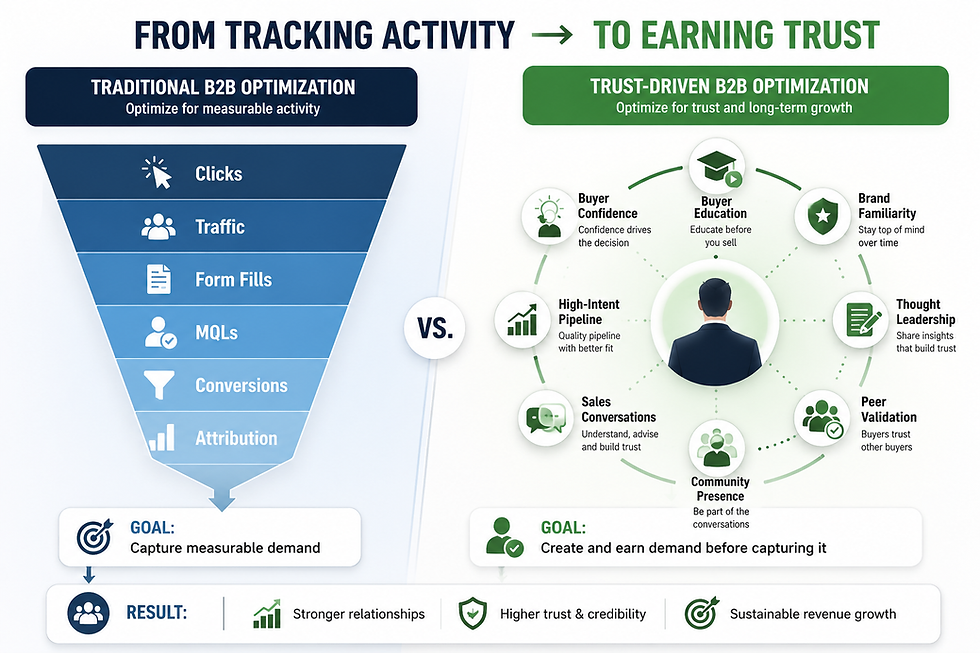
Marketing software is fantastic at measuring digital interactions. It analyzes website views, advertisement clicks, engagement rates, campaign effectiveness, and conversions with high precision.
Yet, software can measure only interactions that it observes.
It is unable to catch the conversations happening in private Slack channels, the recommendations provided via WhatsApp, the discussions occurring during industry-related events, and the months-long relationship established through podcasts and thought leadership.
Buyers can recall all this. In case they are asked directly, they are able to share details like:
"I've been following your podcasts for several months."
"Our customer referred your platform to us."
"I kept seeing your CEO's posts on LinkedIn, and they caught my attention."
"Your content was shared in our Slack channel."
"My colleague sent me your newsletter."
These interactions might not even show up in Google Analytics or your CRM. But they are likely to be the actual reason why buyers decided to reach out.
This is why asking “How did you actually hear about us?” uncovers insights that traditional attribution systems are unable to capture on their own.
Why the Word "Actually" Changes the Quality of Responses
The phrasing of the question can greatly affect the answers you get.
Most companies will ask potential customers, "How did you hear about us?" While the question is valid, it can yield very short answers based mostly on their latest contact.
The customer will only say:
"Google."
Logically, this is the correct answer since they found you through your online presence.
However, if the question asked would be "How did you actually hear about us?" It requires the buyer to pause and reflect on where their journey actually began, rather than simply focusing on the final interaction that led to conversion.
They wouldn't say "Google," but they would explain:
"It all started when I listened to your CEO on a podcast and then followed your LinkedIn feed. After hearing my colleague talk about you, I Googled you to visit your site."
This yields an entirely different insight into the purchase process.
The inclusion of just one small word made all the difference.
Open-Ended Responses vs. Dropdown Menus
Once a company begins asking “How did you actually hear about us?” the next challenge is determining the best way for buyers to share their answers.
Dropdown answers seem appealing because they make tracking easier. A prospect can easily select answers like Google, LinkedIn, Referral, Conference, or Podcast.
The downside is that predefined choices always over-simplify things.
For example, consider a buyer who was first exposed to your business through the founder's speech at an industry conference, attended a webinar, read your LinkedIn updates, and finally got a referral from an existing customer.
A single dropdown choice will not capture the buyer's journey.
Instead, an open text box lets buyers write about it themselves. Even though open-ended questions need more work to analyze, they usually bring surprising insights and uncover new marketing channels that weren't even on the radar of many businesses.
Companies can usually categorize open-ended answers later but still keep the buyer's exact words.
Where This Question Should Appear on Your Lead Forms
The effectiveness of this question depends not only on how it is phrased but also when it is presented to buyers.
High-intent forms where buyers have done most of their researching and will start interacting with your company would be the ideal choice for this question.
These types of forms would include things like demo request forms, "Contact Sales" page forms, consultation booking, enterprise pricing forms, and free trial requests.
At this point, buyers would be more inclined to recall the moments that affected their decision since they spent considerable time researching all options available.
For instance, someone signing up for a newsletter or downloading an introductory guide is still in the research phase and probably wouldn't give accurate attribution information.
Self-reported Attribution captured at high-intent conversion points guarantees that the data will be provided by buyers who actually have commercial interest.
Turning Buyer Responses into Better Marketing Decisions
The question’s greatest impact comes from what happens after it is answered, as its value extends far beyond the form where it first appears.
After reviewing hundreds of buyer responses, organizations begin to identify recurring patterns and common themes. The marketing team discovers that executive thought leadership consistently plays a key role in capturing the attention of enterprise buyers. That referrals consistently generate the highest-quality leads, while podcasts often introduce new prospects to the brand long before they take any measurable action. All of these insights make it easier for the entire organization to make more informed decisions.
Marketing gains a clearer understanding of where resources and investments will create the greatest impact. Sales walks into discovery calls having a better sense of the story of that buyer. RevOps improves its attribution process using qualitative insights along with its quantitative information. Leadership feels more comfortable with the value of brand-building activities that would be undervalued in dashboards.
Rather than deciding based on what software tells them, companies decide based on how buyers find and learn about their company.
Common Mistakes That Reduce the Value of This Question
Although the question itself is simple, poor implementation can significantly limit the value of the insights it provides.
A common mistake is using a restrictive dropdown menu instead of an open question that enables customers to describe their experience in detail. Also, many businesses do not analyze responses, making the insights useless since there is no review of recurring themes.
Another mistake is using the question purely for marketing purposes. The business must use the insights as a way of getting intelligence that should be shared with sales, RevOps, and other departments because all benefit from knowing about buyer behavior.
Lastly, many businesses focus too heavily on individual responses instead of identifying the larger trends and patterns that emerge over time. An individual response might be interesting, but when there are hundreds of such answers, they usually show recurring trends that shape the marketing strategy of the business.
The true value of the question does not come from simply asking it, but from the insights gained through analyzing the answers.
One Question That Strengthens the Entire Hybrid Attribution Framework
While traditional forms treat this question as a minor detail, its role in modern attribution is far more significant because it captures the buyer context that software often misses.
It is the cornerstone for Self-Reported Attribution, offering qualitative input to marketing analytics but not competing with them. In combination with CRM information, sales discovery, and classic attribution reports, buyer feedback will offer a much richer picture of what is happening along the buyer journey.
Instead of using only software in order to explain the performance of their marketing initiatives, companies receive first-hand information from the buyers themselves.
This combination becomes the basis of the Hybrid Attribution Model.
Conclusion: The Most Valuable Field on Your Lead Form Isn't About Contact Information
Companies invest huge amounts of time tweaking lead forms to improve conversions, yet they forget about the single question that can help them understand what made buyers take the final step towards conversion.
The question provides buyers with a way to identify the actual sources of influence behind their decision, whether that was a podcast they heard, a LinkedIn post they read, a referral they received, or a conversation they had. The information that is not included in any standard attribution report is very important when it comes to explaining the actual reasons for new business opportunities.
Once you include this question in your lead forms and start getting these insights into your marketing funnel, you will be able to get more precise attribution results, make better investments in your marketing efforts, improve alignment between Marketing and Sales, and understand the buyer journey better.
With the modern B2B environment where Dark Social drives numerous purchase decisions, the most valuable field on your lead form is not a contact detail anymore. It is the field that uncovers the story behind every opportunity by revealing the answer to one critical question: “How did you hear about us?”
Introduction: The Most Valuable Question You're Probably Not Asking
A potential client fills out the demo form on your website. The lead source gets automatically populated with Organic Search, Direct Traffic, or Paid Search in your CRM. Marketers attribute the conversion to the given channel, and move the lead to the sales pipeline. It seems pretty clear.
The discovery call with the prospect starts.
Asking the lead about their path to getting acquainted with your company, the salesperson receives an absolutely different answer than that given by the marketing dashboard. The prospect says that he got to know about the CEO via a podcast, followed your LinkedIn activity for months, got recommended by his friend, and only then found your website to fill out the demo form.
All those influences remain invisible in the attribution dashboard.
It is precisely because of this attribution gap that one simple question, “How did you really hear about us?” has become one of the most valuable additions to modern B2B lead forms. Buyers get an opportunity to share what actually influenced their decision-making process without leaving any business in the lurch with respect to attributing the credit to software. In the era of Dark Social, one simple question holds the potential to change your marketing game completely.
Why This One Question Matters More Than Another Marketing Metric
Many businesses invest significant amounts of effort into optimization of their lead forms. They determine what fields to make obligatory, eliminate any unnecessary steps, and test different designs to increase conversion rates. Common lead forms ask for information like a prospect's name, email, company, job position, telephone number, and size of the organization.
While this information is crucial for qualification of the lead, it doesn't tell you much about what made the customer choose to reach out to you.
It's good to know where a lead works; it's even better to learn how long they have been following your CEO on LinkedIn before asking for a demo.
The question "How did you actually hear about us?" will help you connect contact details with the intelligence about your customers. It will show you the experience, conversation, and content that shaped the buying decision much before filling out the form.
You don't gather another metric – you start gathering the story behind it.
What Buyers Tell You That Software Never Can
Marketing software is fantastic at measuring digital interactions. It analyzes website views, advertisement clicks, engagement rates, campaign effectiveness, and conversions with high precision.
Yet, software can measure only interactions that it observes.
It is unable to catch the conversations happening in private Slack channels, the recommendations provided via WhatsApp, the discussions occurring during industry-related events, and the months-long relationship established through podcasts and thought leadership.
Buyers can recall all this. In case they are asked directly, they are able to share details like:
"I've been following your podcasts for several months."
"Our customer referred your platform to us."
"I kept seeing your CEO's posts on LinkedIn, and they caught my attention."
"Your content was shared in our Slack channel."
"My colleague sent me your newsletter."
These interactions might not even show up in Google Analytics or your CRM. But they are likely to be the actual reason why buyers decided to reach out.
This is why asking “How did you actually hear about us?” uncovers insights that traditional attribution systems are unable to capture on their own.
Why the Word "Actually" Changes the Quality of Responses
The phrasing of the question can greatly affect the answers you get.
Most companies will ask potential customers, "How did you hear about us?" While the question is valid, it can yield very short answers based mostly on their latest contact.
The customer will only say:
"Google."
Logically, this is the correct answer since they found you through your online presence.
However, if the question asked would be "How did you actually hear about us?" It requires the buyer to pause and reflect on where their journey actually began, rather than simply focusing on the final interaction that led to conversion.
They wouldn't say "Google," but they would explain:
"It all started when I listened to your CEO on a podcast and then followed your LinkedIn feed. After hearing my colleague talk about you, I Googled you to visit your site."
This yields an entirely different insight into the purchase process.
The inclusion of just one small word made all the difference.
Open-Ended Responses vs. Dropdown Menus
Once a company begins asking “How did you actually hear about us?” the next challenge is determining the best way for buyers to share their answers.
Dropdown answers seem appealing because they make tracking easier. A prospect can easily select answers like Google, LinkedIn, Referral, Conference, or Podcast.
The downside is that predefined choices always over-simplify things.
For example, consider a buyer who was first exposed to your business through the founder's speech at an industry conference, attended a webinar, read your LinkedIn updates, and finally got a referral from an existing customer.
A single dropdown choice will not capture the buyer's journey.
Instead, an open text box lets buyers write about it themselves. Even though open-ended questions need more work to analyze, they usually bring surprising insights and uncover new marketing channels that weren't even on the radar of many businesses.
Companies can usually categorize open-ended answers later but still keep the buyer's exact words.
Where This Question Should Appear on Your Lead Forms
The effectiveness of this question depends not only on how it is phrased but also when it is presented to buyers.
High-intent forms where buyers have done most of their researching and will start interacting with your company would be the ideal choice for this question.
These types of forms would include things like demo request forms, "Contact Sales" page forms, consultation booking, enterprise pricing forms, and free trial requests.
At this point, buyers would be more inclined to recall the moments that affected their decision since they spent considerable time researching all options available.
For instance, someone signing up for a newsletter or downloading an introductory guide is still in the research phase and probably wouldn't give accurate attribution information.
Self-reported Attribution captured at high-intent conversion points guarantees that the data will be provided by buyers who actually have commercial interest.
Turning Buyer Responses into Better Marketing Decisions
The question’s greatest impact comes from what happens after it is answered, as its value extends far beyond the form where it first appears.
After reviewing hundreds of buyer responses, organizations begin to identify recurring patterns and common themes. The marketing team discovers that executive thought leadership consistently plays a key role in capturing the attention of enterprise buyers. That referrals consistently generate the highest-quality leads, while podcasts often introduce new prospects to the brand long before they take any measurable action. All of these insights make it easier for the entire organization to make more informed decisions.
Marketing gains a clearer understanding of where resources and investments will create the greatest impact. Sales walks into discovery calls having a better sense of the story of that buyer. RevOps improves its attribution process using qualitative insights along with its quantitative information. Leadership feels more comfortable with the value of brand-building activities that would be undervalued in dashboards.
Rather than deciding based on what software tells them, companies decide based on how buyers find and learn about their company.
Common Mistakes That Reduce the Value of This Question
Although the question itself is simple, poor implementation can significantly limit the value of the insights it provides.
A common mistake is using a restrictive dropdown menu instead of an open question that enables customers to describe their experience in detail. Also, many businesses do not analyze responses, making the insights useless since there is no review of recurring themes.
Another mistake is using the question purely for marketing purposes. The business must use the insights as a way of getting intelligence that should be shared with sales, RevOps, and other departments because all benefit from knowing about buyer behavior.
Lastly, many businesses focus too heavily on individual responses instead of identifying the larger trends and patterns that emerge over time. An individual response might be interesting, but when there are hundreds of such answers, they usually show recurring trends that shape the marketing strategy of the business.
The true value of the question does not come from simply asking it, but from the insights gained through analyzing the answers.
One Question That Strengthens the Entire Hybrid Attribution Framework
While traditional forms treat this question as a minor detail, its role in modern attribution is far more significant because it captures the buyer context that software often misses.
It is the cornerstone for Self-Reported Attribution, offering qualitative input to marketing analytics but not competing with them. In combination with CRM information, sales discovery, and classic attribution reports, buyer feedback will offer a much richer picture of what is happening along the buyer journey.
Instead of using only software in order to explain the performance of their marketing initiatives, companies receive first-hand information from the buyers themselves.
This combination becomes the basis of the Hybrid Attribution Model.
Conclusion: The Most Valuable Field on Your Lead Form Isn't About Contact Information
Companies invest huge amounts of time tweaking lead forms to improve conversions, yet they forget about the single question that can help them understand what made buyers take the final step towards conversion.
The question provides buyers with a way to identify the actual sources of influence behind their decision, whether that was a podcast they heard, a LinkedIn post they read, a referral they received, or a conversation they had. The information that is not included in any standard attribution report is very important when it comes to explaining the actual reasons for new business opportunities.
Once you include this question in your lead forms and start getting these insights into your marketing funnel, you will be able to get more precise attribution results, make better investments in your marketing efforts, improve alignment between Marketing and Sales, and understand the buyer journey better.
With the modern B2B environment where Dark Social drives numerous purchase decisions, the most valuable field on your lead form is not a contact detail anymore. It is the field that uncovers the story behind every opportunity by revealing the answer to one critical question: “How did you hear about us?”


Comments