Is Your Attribution Software Blinding You to Real Buyer Behavior?

Introduction: What If Your Best Marketing Isn't Getting Credit?
Your marketing dashboard indicates that the lead was gained from organic search results. Google Analytics claims that the prospect came through direct traffic, but your CRM system records that the last conversion was achieved through an email campaign. Everything appears to be going smoothly until your sales team asks the buyer, “How did you first hear about our company?” The answer is often far more complex than expected: “I heard your CEO on a podcast, and a peer recommended your company in a Slack community.”
All of a sudden, your attribution report is incomplete.
The above is becoming increasingly frequent as the buying journey transforms. The current buyers are influenced by private conversations, communities, podcasts, and peer recommendations that seldom make it into standard analytics tools. Although marketing attribution software is a key component in marketing, its relevance has been greatly diminished due to the change in the buying process.

Why Attribution Software Was Built for a Different Era
Marketing attribution was created as a tool for companies to figure out which marketing channels created leads and revenue for them. Given the simplicity of the buyer's journey in those times, such an approach served its purpose quite well. The lead would conduct their research, click the advertisement or search engine results, go through a landing page, fill out a form, and enter into the sales funnel.
Models of first-click attribution, last-click attribution, and later multi-touch attribution were all based on this linear buyer's journey. These methods enabled marketers to assess the performance of their campaigns, budget allocation, and the ROI of marketing efforts.
But all this was possible because the attribution software presupposed that the buyer was interacting within the digital world where all of their actions were monitored by means of technology. Website, email campaigns, and online ads were considered to be the main touchpoints in those days.
But that era is over.
Modern B2B Buyer Behavior Doesn't Follow a Straight Line
The modern enterprise buyer does not usually proceed along a linear marketing funnel. In contrast, they collect information from various places during a lengthy period before reaching out to a supplier.
A buyer might start by listening to an industry-related podcast while commuting in the morning. Further, they consume LinkedIn content posted by reputable people, engage in conversation in a private Slack network, consume educational videos available on YouTube, and consult colleagues on the matter. They might also visit conferences, discuss ideas in WhatsApp groups, and consult peers who have already used similar solutions.
These engagements take place over a considerable period, which can last for weeks or even months. It involves many different participants who independently conduct research and then share their findings with other participants in the buying group.
When a buyer visits a company website or asks for a product demo, the bulk of the purchase decision has already been influenced by activities that attribution platforms cannot track.
This is how the phenomenon of Dark Social operates. Buyers conduct a great deal of research, but most of it takes place off the radar of conventional marketing tools.
What Attribution Software Can Measure and What It Misses
Attribution software continues to offer useful information regarding marketing efforts. It accurately calculates website visits, campaign clicks, emails, paid advertising, form submissions, and referrals. This information assists organizations in determining how potential customers are interacting with their publicly available digital assets.
The difficulty arises when buyers enter private settings.
Standard attribution software can neither see what is being discussed within Slack channels, nor within Discord, LinkedIn private messages, or any other similar platforms. Furthermore, it fails to recognize recommendations made between the executives at a conference or conversations after listening to a podcast.
Such communications play a key part in influencing buying decisions and yet leave little referral information. Once a buyer makes it to an organization's website, attribution software attributes the purchase to the last measurable interaction instead of to the previous experiences that built trust.
In other words, attribution software measures the interaction very effectively. What it fails to measure is the influence.
The Hidden Cost of Incomplete Attribution
Incomplete attribution goes well beyond its implications for marketing metrics. It influences how an organization allocates budget, analyzes campaigns, and measures success.
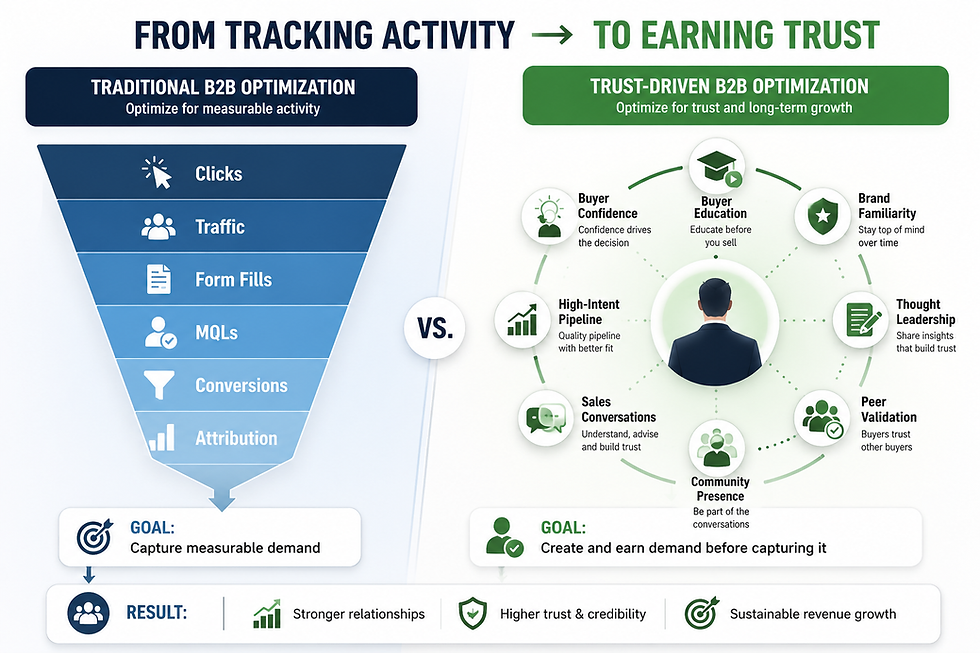
As dashboards continuously measure the impact of channels such as paid and organic search, organizational leadership will consider that these efforts need more investment. But activities such as executive thought leadership, podcasting, educational video creation, customer advocacy, and community development will be seen as low priority because they cannot be quantified.
Thus, an organizational misalignment begins, where companies start optimizing not on their buyers' relationships but on clicks that can be measured.
But that's not all sales representatives will hear from their prospects about podcasts, peer referrals, and conversations in private communities, and the marketing reports will say that the prospects were looking for products through direct traffic or branded search.
There are many hidden costs associated with incomplete attribution.
Why Buyer Behavior Matters More Than Dashboard Metrics
Analytics offer important data, but data does not offer explanations for decision-making.
Knowing buyer behavior requires looking into human behavior behind every purchase in addition to data offered by marketing tech. Enterprise buyers assess risk, search for trusted advice, compare experience, and gain confidence in their purchases during conversations that analytics tools cannot catch.
Insights gained from qualitative feedback are more valuable than those generated by software. The buyer who shares a story that a podcast gave them a different perspective on a subject or shared with them that they trusted someone's opinion about the vendor offers insights that cannot be generated automatically.
This is why companies should view customer conversations as one of the key sources of marketing intelligence. Analytics explain what happens on websites while buyer behavior explains why it happens.
Companies that combine the two get a better understanding of the full buyer journey.
Building a Smarter Attribution Strategy
Enhancing marketing attribution need not involve doing away with current analytics platforms. Rather, businesses need to incorporate qualitative information into the mix, which captures the true experiences of buyers.
One strategy would be to incorporate both analytics and self-attribution. Finding out how buyers first became aware of the company often reveals many touch points that are not captured in any attribution report. Salespeople will play a major role here by capturing the stories of the buyers in discovery calls and capturing them in the CRM system.
Customer feedback, win/loss reviews, and repeated trends across conversations can provide additional insights into the buyer journey. This information, together with web analytics and campaign information, gives a much clearer picture of what drives buyers to purchase.
This mixed strategy recognizes the utility of software tools but also recognizes the reality that there is no way an attribution model can capture everything happening in today's buying environment.
Marketing Attribution Should Support Decisions, Not Replace Judgment
Marketing dashboards can be great decision aids but should never be the only place we turn for strategic wisdom.
All attribution analyses suffer from the constraints of the technology used to create them. Where dashboards analyze digital touches accurately, they are incapable of describing human connections, reputation, trust, or peer influence.
Marketing pros know the difference between the two and use attribution analytics along with customer insights, sales discussions, market trends, and qualitative research. They know that while performance is measurable, there is a lot more to the story.
Bringing the wisdom of software together with human insight creates better decision-making and resource allocation in the quest for demand creation.
In the end, marketing attribution is not meant to override our judgment; it is supposed to enhance it.
Conclusion: Don't Let Your Software Define Your Customer's Journey
Marketing attribution continues to be an essential part of modern B2B marketing strategies, yet one must never forget that marketing attribution software alone is far from being a full picture of buyer behavior. Enterprise-level decision-making processes are increasingly influenced by such forms of communication as podcasts, secret groups, direct messaging, peer recommendations, and other types of Dark Social, which software is unable to monitor.
Companies relying solely on their attribution dashboards run the risk of missing those conversations that help to build the buyer's trust well before they visit the website. In the age of ever-growing complexity of buyer journeys, the understanding of hidden influences is becoming as important as analysis of measurable actions.
Successful B2B companies won't turn their backs on attribution software, but rather will combine it with customer conversations, self-reports and sales intelligence to build a bigger picture of what is really going on during the buyer journey.
The next question that marketing managers should start asking is not "What is reported by our attribution software?" but "What really influenced our customer's decision?"


Comments