Why Qualitative Data is the Missing Piece in Your RevOps Strategy

Your RevOps Dashboard Shows the Numbers, But Not the Story
RevOps has revolutionized B2B performance tracking in a big way. A contemporary RevOps department can now track pipeline building, conversions, sales velocity, and revenue with remarkable precision. The dashboard helps keep track of all the marketing, selling, and customer acquisition efforts. Those KPIs are very important for business evaluation, yet incomplete.
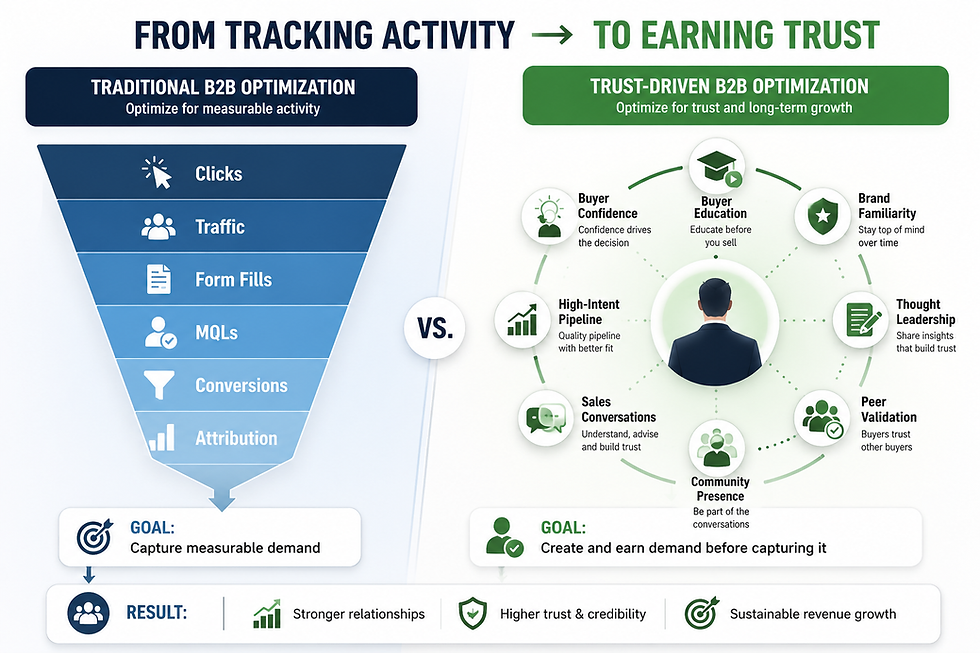
The dashboard can display where the deal originated from, how long the selling cycle took, and which campaigns were attributed. However, it will be unable to tell you what made the buyer trust your brand, what persuaded the buying committee, and which experience helped close the deal.
That is where qualitative data comes into play. It fills in the gaps in the narrative and helps understand the reasoning behind each stage of the customer journey. That is what allows RevOps departments to get better attribution, alignment, and revenue management.

What Are Qualitative Data in RevOps?
Qualitative data is descriptive data collected directly from the buyers rather than created by software in RevOps. Quantitative data is about actions that can be measured and counted, whereas qualitative data gives insights into what motivates buyers, their preferences, and their buying process.
Qualitative data is gathered in different ways, such as Self-Reported Attribution, sales discovery, interviews with customers, win/loss analysis, surveys of customers after purchase, and feedback from them. This is the data that cannot be found on analytics platforms.
For instance, a buyer might say he got to know about your company from listening to a podcast, trusted you because of the content written by executives on LinkedIn, or requested a demo based on the advice of his colleagues. These cases are not usually included in the usual attribution reports but are very likely to have a great impact on the buyer's choice.
Qualitative data does not measure actions; it tells the reasons why people perform them.
Why Quantitative Data Alone Leaves RevOps With Blind Spots
Numbers have always been the backbone of Revenue Operations since they offer objective measurements of business results. Dashboards show how the pipeline is growing, how many leads turn into customers, how good marketing and sales performance is, what revenue is, and how accurate forecasting is. Such data enables decision-making and operational evaluation.
But the numbers don't tell the whole story. It's clear from the dashboard whether the opportunity has come from Organic Search. But it doesn't answer the question as to why the customer sought out the company to begin with. Numbers do not take into account the effect of the podcast interview, the discussion on LinkedIn, referrals, and recommendations made in a closed Slack group.
Since the B2B buyers' journey has become increasingly complicated, all those factors have more significance than ever before. Quantitative data tells what is visible, but it overlooks conversations and social proof.
How Qualitative Data Completes the Buyer Journey
Every customer journey has both measurable touches and intangible touches. Measurable touches include website visits, form fills, email opens, and campaign results. Intangible touches are less frequently collected and include the reasons the buyer became a buyer in the first place.
That is where qualitative data comes in handy.
In a discovery call or interview with the buyer, they may tell you that the first touchpoint for learning about the company was listening to a podcast, following the company on LinkedIn, researching possible vendors among peers, or even reading industry peers' recommendations.
The ability to learn about these intangible touches helps RevOps organizations understand the full context of the customer journey. It enables organizations to realize what led to their opportunity and not just rely on the final website touch.
Quantitative and qualitative data together help turn disjointed touches into a coherent buyer journey.
The Role of Qualitative Data in the Hybrid Attribution Model
For the Hybrid Attribution Model, qualitative data becomes the means for bridging the gap between measurable interactions and actual buyer behavior. Digital analytics provided by traditional attribution models is important, but not enough to cover all customer journey steps without further explanations.
In order to create a Hybrid Attribution Model, it is necessary to integrate three types of data into one model. Analytics of software platforms (Google Analytics, CRM, etc.) provide website and campaign interactions and conversions. Self-reported Attribution reveals how the customer initially found out about the company and the factors that affected their decision. Sales discovery interviews reveal additional information regarding evaluation criteria, decision makers, and trust-building experience.
Qualitative data allows you to connect three sources into the attribution model. Instead of measuring interactions, qualitative data helps understand the reasons behind interactions.
By combining analytics with qualitative insights, RevOps teams go beyond reporting and create a more precise picture of how marketing, sales, and customer experience impact revenue generation.
How RevOps Teams Can Collect Better Qualitative Data
Qualitative data gathering should be an integral part of any RevOps strategy and not something that happens occasionally. In the best-case scenario, companies develop processes for gathering insights on buyers at various stages of their journeys.
Perhaps the easiest way to do so is to incorporate into high-intent forms the so-called Self-Reported Attribution questions, for example, "How did you actually find out about us?"
Sales teams can use standardized discovery questions to uncover how buyers have found out about the company initially, what resources have helped them to assess the product or service, and what has made them finally decide to proceed. Customer interviews and win/loss reviews can serve as further tools to gather qualitative data.
Of course, the key thing here is to make sure that gathered insights are collected and analyzed by Marketing, Sales, and RevOps.
How Qualitative Data Improves Revenue Decisions
There is far more use for qualitative data aside from attribution. This type of data helps with decision-making throughout the entire Revenue Operations process since it gives more context that quantitative measures cannot provide.
As RevOps professionals learn what impacts buyers, they will be able to plan budget allocations more efficiently and concentrate on those efforts that are always driving demand generation. Tactics like thought leadership, podcasts, customer advocacy, and community involvement often get overlooked in traditional dashboards, but many times, qualitative analysis shows how much of an impact they make on the buying process.
Another advantage of qualitative data is the improved relationship between the Marketing and Sales departments. Instead of getting different reports about buyers' behavior, both teams will have access to information about the reasons why people purchase your products or services.
Besides, the executive team will have a chance to make better forecasts about the future since they will know where those opportunities came from and why people were entering the pipeline.
In general, better context leads to better decisions.
Common Qualitative Data Errors That RevOps Teams Commit
While most companies gather customer feedback, it remains underutilized in making business decisions. One mistake made by many companies is ignoring qualitative data and considering it an anecdote instead of treating it as business intelligence.
A second mistake is gathering Self-Reported Attribution answers without studying consistent patterns. Single comments may not have much importance, but consistent patterns can bring a lot of useful insights regarding buyers' behavior and marketing efficiency.
Another mistake is keeping valuable customer insights inside Sales. Discovery sessions bring plenty of attribution data, but it is rarely passed to Marketing or RevOps teams that are responsible for strategic decision-making.
Relying only on dashboards because quantitative reports seem more objective is another common mistake. Metrics are crucial, but it is impossible to understand customers' motivations without qualitative research.
The purpose is not to eliminate quantitative measurement from the process. Successful RevOps teams use both kinds of insights in order to form a complete picture of revenue creation and customers' behavior.
Building a Revenue Strategy That Combines Data and Context
The success of Revenue Operations depends on the ability to combine measurable performance with customer insights. Both elements alone are insufficient, while together they provide a comprehensive picture of how the revenue is being produced.
An ideal RevOps strategy takes into account the fact that while dashboards help analyze the results, buyers' stories tell why certain results have been achieved. The technology shows where conversions happened, while context tells what made buyers trustworthy and what made them buy.
This combination makes it possible to make more precise attributions, improve the alignment of Marketing and Sales, and plan strategically. It also allows companies to understand the increasing importance of dark social, executive thought leadership, and peer recommendations that analytics often does not cover.
As buyer journeys become increasingly complex, those companies that combine data with context will enjoy a serious competitive edge over those who use only software analysis.
Conclusion: The Best RevOps Strategies Measure Numbers and Understand People
There has never been so much data for Revenue Operations, but growing successfully requires more than reporting correctly. Dashboards reveal what took place during the buyer journey; however, they seldom reveal why buyers chose to take those actions.
That is why qualitative data is a missing component in many RevOps strategies. It is what gives the necessary context to be able to know buyer motivations, trust indicators, decision influencers, and additional attribution sources that cannot be measured by software.
By integrating quantitative analysis with Self-Reported Attribution, Sales Discovery, and Customer Insights, organizations get a clearer understanding of their revenue generation process. In that way, they enhance attribution, Marketing-Sales collaboration, and decision-making processes.
The best RevOps organizations are not just measuring performance. They are also understanding the people behind the numbers.


Comments