Why Word-of-Mouth is the Hardest (and Most Important) Metric to Track Today

Introduction: The Most Powerful Marketing Channel Isn't on Your Dashboard
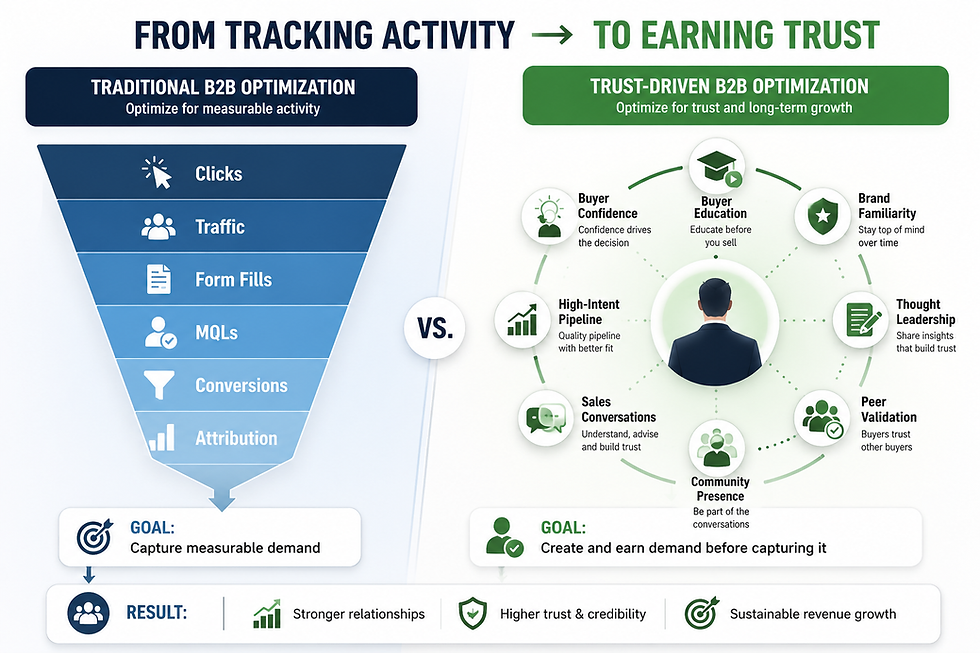
Modern marketing departments have access to more data and metrics than ever before. Website traffic, performance of individual campaigns, clicks and conversions, customer acquisition cost can be measured and calculated with surprising accuracy. And yet, there is one of the most important factors which determines the success of any business today and which remains unnoticed by almost any analytics system out there.
Ask a new client about the reason for choosing your company and the answer is usually extremely straightforward: "One of my colleagues recommended you". This recommendation might have been made in a private Slack channel, in a LinkedIn direct message or at a business event – the result remains the same: trust has been built well before a buyer even entered your site.
And that is why word-of-mouth marketing remains one of the most valuable assets for B2B marketers. It influences buying decisions, increases credibility and speeds up the buying process. However, since it happens privately, it is often not registered by conventional attribution systems.

Why Word-of-Mouth Still Drives Enterprise Buying Decisions
The enterprise purchase decision entails much money, effort, and commitment. The wrong choice of software, technology vendor, or service partner may influence not only the productivity and budgeting of enterprises but also their reputation among clients.
As a result of the high stakes involved, the enterprise purchaser will never base the decision only on the promotional material. Before making the decision, the buyer is in search of the endorsement of a trustworthy person. They turn to colleagues, peers in the industry, and specialists who have already had similar problems.
Sometimes a simple recommendation of a person with personal experience is worth much more than a glossy brochure and a well-designed advertising campaign. Buyers consider this kind of conversation honest and unbiased as it is not based on the promotional message.
This is the natural tendency that makes word of mouth so powerful among enterprise purchasers' preferences.
Word-of-Mouth Has Changed, But It Hasn't Disappeared
A belief among marketers is that word-of-mouth marketing has lost its relevance in the digital era. In fact, it has only changed.
Whereas in the past recommendations were given during business meetings, at conferences or over the phone, today this happens via social media channels where people spend their time working daily. A buyer can get recommendations from a vendor via LinkedIn messages, ask about software via private Slack groups or talk about the experience of implementing some solution in Discord.
Business executive networks, WhatsApp chats, and private emails are other popular channels where the leaders share opinions regarding vendors and their solutions.
All these channels have broadened the possibilities of word-of-mouth marketing while making it much harder to track. Recommendations spread faster, reach more people, and affect purchase decisions even before the marketing department finds out about any opportunities.
This change is one of the key elements of Dark Social. Business-related conversations are taking place on a regular basis, but no traces remain for analytical tools to use.
Why Traditional Attribution Cannot Measure Word-of-Mouth
Marketing attribution models are usually designed based on measurable interactions with digital channels. They detect sources of referrals using cookies, pixels, links, and UTMs. Such models function efficiently when consumers go through their online journey following certain steps, but they fail when purchases are made due to informal conversations.
Consider the case of a technology executive who is suggested a certain company by a reliable colleague at an industry event. Then, after several days, another one recommends the same company to him on a private Slack channel. After several weeks, he decides to look for the company's website and get the demo.
From the analytics point of view, the visit may look like direct traffic or organic search. What remains unseen for the attribution model is the recommendations made in a non-trackable way.
In this example, we have a considerable attribution problem since marketing software sees the last visit to the website while missing the informal conversations that led the buyer to make a purchase.
The Hidden Business Value of Word-of-Mouth Marketing
The impact of word-of-mouth extends far beyond building brand awareness. Consumers who are driven by trustworthy recommendations tend to be different from the leads created by traditional marketing campaigns.
As a result of trust already being built, such leads enter the sales process more confident. They know what the business is all about, have realistic expectations, and are more ready to take the next step.
Such early-stage confidence makes sales cycles faster since leads do not need much convincing during the evaluation stage. Besides, lead quality tends to be better as people recommended by others are aware of their business problems and want to buy something.
Word-of-mouth may help in reducing customer acquisition costs through creating demand without having to spend on additional marketing efforts. As a rule, customers acquired through trusted recommendations become advocates and continue sending referrals.
It is hard to quantify such advantages, but they make an important contribution to revenue performance.
Why Companies Consistently Underestimate Brand Advocacy
Companies spend a great deal on campaigns that result in immediate and tangible results without paying attention to those things that make customers advocate for a brand.
Great customer experiences, executive thought leadership, educational content, and community participation do not deliver immediate attribution. Nevertheless, they build the credibility that drives customers to share information about the company with their coworkers and peers.
If the effectiveness of marketing campaigns is measured by measurable clicks and conversions, then such initiatives seem to be less valuable than any paid ad or lead gen campaign. This can be very dangerous since companies prioritize the short-term metrics rather than brand influence.
Strong B2B brands know that brand advocacy can't be built via promotion campaigns. It takes time and grows from customers' success, expertise, and positive experiences.
These are the companies that tend to achieve much greater influence than their dashboards show.
How to Better Understand the Impact of Word-of-Mouth
While it is impossible to quantify word-of-mouth, companies can have a much better idea of how it influences their success through combining hard numbers with soft insights.
The easiest way is to ask customers where they initially heard about the organization. Sales teams can include this question in the discovery stage, while marketers can include self-attribution fields in demo and contact forms.
Often enough, such insights show correlations that analytics systems cannot identify. For instance, prospects might regularly refer to recommendations they received from colleagues, industry groups, podcast episodes or executive pieces of content that are not captured in any reports.
Another thing that companies should do is ask their sales reps to document customer stories in the CRM system. This information will enable marketing teams to know what is creating trust before customers actually start engaging with their activities.
It is important to focus on getting a bigger picture instead of striving for perfect attribution.
Building a Business That People Want to Recommend
The best word-of-mouth marketing strategies do not start with initiatives. The most successful ones start by delivering the kind of value that makes people eager to talk about your business.
Businesses receive referrals through solving problems, giving excellent experiences to customers, and showcasing their expertise. Educational materials, customer service, and industry community participation all help build the reputation that attracts referrals.
Founders, executives, consultants, and experts also have a big impact on the quality of the word-of-mouth marketing. They create trust in their industries through sharing knowledge and offering useful insights, which in time results in valuable conversations.
Word-of-mouth cannot be forced onto customers. It just happens because of positive experiences that make them want to spread the good word.
Conclusion: The Most Valuable Attribution Often Comes from People, Not Platforms
Word of mouth marketing continues to be among the most powerful tools in B2B growth – despite being one of the most difficult forms of marketing to track. Enterprise customers continue to make use of referrals since they mitigate uncertainty in the process of decision-making.
Dark Social has not rendered referrals less relevant to sales; rather, it has relocated them to private communication channels, professional social networks, and executive communications networks where tracking has become virtually impossible.
Companies that limit themselves to trackable platforms are doing themselves a great disservice; they are failing to see trust as a major competitive advantage and understand how to measure conversations beyond the dashboard.
Modern marketers should not just try to track which marketing campaign generated a certain lead. They should also investigate who influenced the potential customer before they ever reached the company's website.


Comments